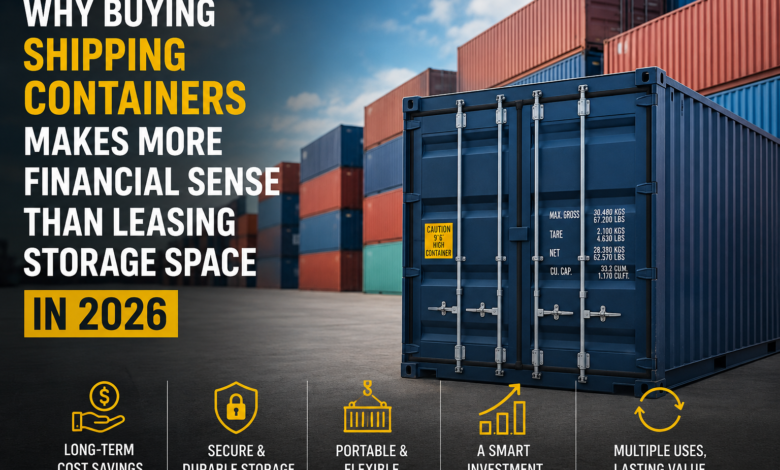
Why Buying Shipping Containers Makes More Financial Sense Than Leasing Storage Space in 2026

Every growing business eventually reaches a point where storage becomes more than a convenience—it becomes a necessity. Whether it’s protecting expensive equipment, managing seasonal inventory, storing construction materials, or creating additional workspace, having dependable storage directly affects productivity. The real challenge isn’t deciding whether more space is needed; it’s determining the most practical way to acquire it without placing unnecessary pressure on the company’s budget.
For years, leasing storage units has been the default solution for many businesses because it requires little upfront commitment. However, business owners are becoming more conscious of where their money goes over time. Monthly rental payments may appear affordable at first, but after several years, those recurring expenses often exceed the cost of purchasing a permanent storage solution. Instead of building equity in an asset, companies simply continue paying for temporary access.
That shift in thinking has encouraged many organizations to invest in shipping containers rather than relying on leased storage space. Durable, portable, and highly adaptable, these structures provide businesses with long-term value while supporting operations across multiple industries. They can serve as secure storage today and evolve into workshops, offices, equipment rooms, or customized workspaces tomorrow.
As businesses prepare for continued expansion in 2026, financial flexibility has become just as important as operational flexibility. Companies are looking beyond immediate costs and evaluating investments based on the value they continue delivering years after the purchase has been made.
Leasing Solves Today’s Problem but Rarely Tomorrow’s
Renting storage certainly has advantages for businesses with very short-term requirements. It provides quick access to additional space without requiring a major purchase.
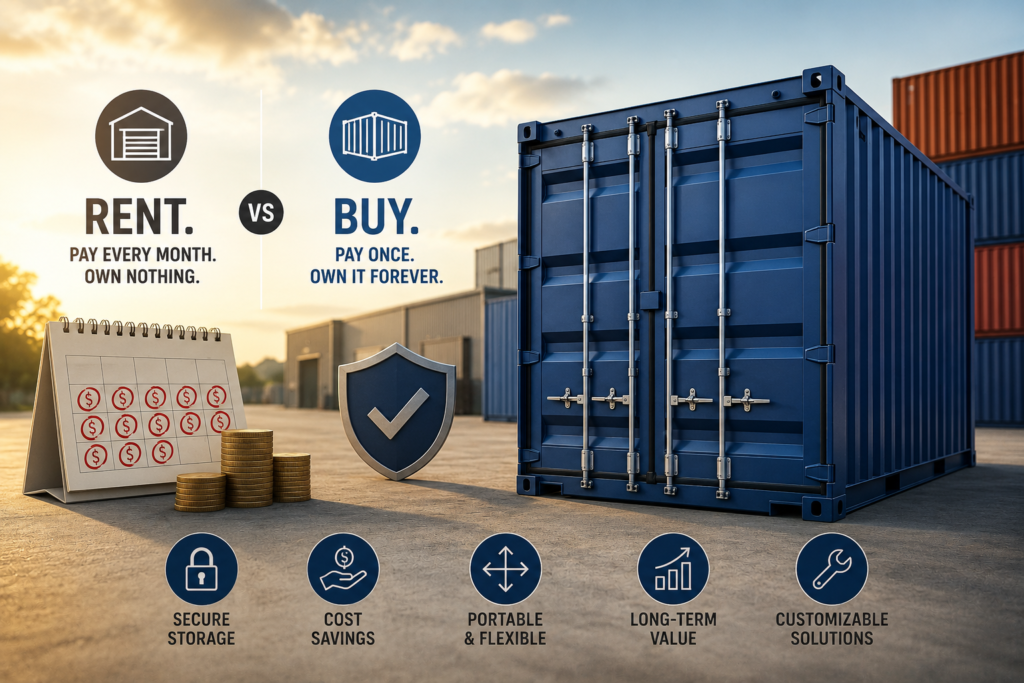
However, businesses with ongoing storage needs often discover that lease payments continue long after the initial benefit has faded. Every month adds another expense to the operating budget, yet nothing tangible is owned at the end of the agreement.
Buying storage changes that relationship entirely. Instead of continuously paying for temporary access, companies own an asset that remains useful throughout its lifespan. Once purchased, it continues supporting operations without recurring rental obligations, creating greater financial stability over time.
Ownership Creates Flexibility That Leasing Cannot Match
Business needs change constantly.
A construction contractor may complete one project before starting another in a different city. A retailer might require additional storage during holiday seasons before relocating inventory elsewhere. Manufacturers regularly reorganize production areas to improve efficiency.
A leased storage facility remains fixed to one location.
A purchased container moves wherever business requires it.
This mobility allows companies to take their infrastructure directly to construction sites, agricultural land, manufacturing facilities, logistics centers, or temporary operational locations instead of transporting materials back and forth between rented facilities.
That level of flexibility often saves both time and operating costs.
Long-Term Cost Comparison Favors Ownership
When comparing leasing with ownership, the conversation should extend beyond monthly pricing.
Businesses should also consider:
- Annual rental increases
- Transportation costs to off-site storage
- Contract renewal fees
- Availability during periods of high demand
- Time spent accessing rented facilities
- Future expansion requirements
While purchasing requires a larger initial investment, ownership frequently proves more economical over several years because recurring rental expenses eventually disappear.
The longer a company expects to need storage, the stronger the financial argument for ownership becomes.
Storage Is Only the Beginning
One of the biggest misconceptions is that containers serve only one purpose.
Modern businesses use them for a wide variety of operational needs, including:
- Secure inventory storage
- Construction equipment protection
- Mobile workshops
- Temporary offices
- Agricultural supply storage
- Event logistics
- Emergency response facilities
- Retail inventory overflow
- Manufacturing support areas
- Maintenance equipment storage
Because operational requirements change over time, the same container can often perform several different roles throughout its service life.
That versatility significantly increases its long-term value.
Better Asset Management Supports Business Growth
Successful businesses view purchases differently than expenses.
An expense disappears after payment.
An asset continues creating value.
Purchasing durable infrastructure strengthens the company’s operational foundation while providing resources that remain available whenever new opportunities arise.
As businesses expand into additional locations or increase inventory levels, existing storage assets continue supporting growth instead of creating additional monthly liabilities.
Strategic investments allow organizations to grow with greater confidence.
New and Used Options Fit Different Business Budgets
Not every company has identical financial priorities.
Some organizations prefer brand-new containers because of appearance and maximum service life.
Others focus on dependable used units that provide excellent value while reducing upfront costs.
Having multiple purchasing options allows businesses to select infrastructure that matches both operational requirements and available budgets.
Instead of forcing companies toward a single solution, ownership offers flexibility at several investment levels.
Faster Deployment Means Faster Productivity
Constructing permanent storage buildings often requires permits, contractors, engineering plans, and months of work before becoming operational.
Many businesses cannot afford to wait that long.
Portable storage solutions provide usable space much faster, allowing organizations to respond quickly to growing inventory, expanding projects, or unexpected operational demands.
Speed frequently becomes a competitive advantage when opportunities appear without warning.
Security Plays an Important Role
Protecting valuable inventory and equipment is just as important as storing it.
Businesses invest significant resources in tools, machinery, spare parts, raw materials, and commercial products. Reliable storage helps reduce exposure to weather while providing an additional layer of protection for valuable assets.
Whether placed at a construction site, warehouse, agricultural property, or industrial facility, dependable storage contributes to smoother daily operations and greater peace of mind.
Planning for Growth Instead of Temporary Convenience
One common mistake businesses make is solving only immediate problems.
Additional storage may seem temporary today, but expanding companies often require even more capacity as customer demand increases.
Purchasing infrastructure with future growth in mind helps organizations avoid repeatedly searching for new rental agreements every time operations expand.
Planning several years ahead usually creates stronger financial outcomes than making decisions based only on current circumstances.
Sustainable Decisions Often Make Better Financial Decisions
Businesses across multiple industries continue looking for practical ways to reduce unnecessary waste while improving operational efficiency.
Choosing durable infrastructure that remains useful for many years supports both objectives. Rather than consuming additional resources through repeated construction or ongoing rental turnover, organizations can maximize the lifespan of existing assets while reducing long-term operating costs.
Sustainability and profitability increasingly support one another rather than competing against each other.
Smart Infrastructure Builds Competitive Advantage
Markets continue changing rapidly.
Companies capable of adapting quickly often outperform competitors limited by rigid infrastructure and long construction timelines.
Portable storage solutions provide organizations with greater freedom to relocate operations, support temporary projects, increase inventory capacity, or create additional workspace without major structural investments.
Infrastructure that adapts alongside business creates opportunities that fixed solutions sometimes cannot provide.
Conclusion
The decision between leasing and ownership extends far beyond monthly pricing. It influences operational flexibility, long-term budgeting, future expansion, and the ability to respond quickly as business needs evolve.
Organizations that invest in shipping containers gain more than additional storage—they acquire a durable business asset capable of supporting multiple projects for years to come. As commercial operations continue adapting to changing market demands in 2026, businesses that prioritize ownership over recurring rental expenses will often find themselves better positioned for sustainable growth, stronger financial control, and greater operational independence.
Frequently Asked Questions
Is buying a shipping container cheaper than renting storage over the long term?
For businesses with ongoing storage needs, ownership often becomes more cost-effective because recurring rental payments eventually exceed the purchase cost of a durable container.
Can shipping containers be used for more than storage?
Yes. Many businesses convert containers into workshops, offices, equipment rooms, maintenance facilities, retail spaces, and customized operational units depending on their requirements.
Are used shipping containers a good investment?
Well-maintained used containers can provide excellent value while offering reliable performance for businesses seeking lower upfront costs.
Which industries benefit the most from container ownership?
Construction, manufacturing, agriculture, logistics, retail, education, emergency services, and industrial operations commonly use container-based storage because of its flexibility and durability.
Why are more companies investing in portable storage?
Portable storage allows businesses to relocate infrastructure, respond faster to operational changes, protect valuable equipment, and avoid long-term rental commitments.