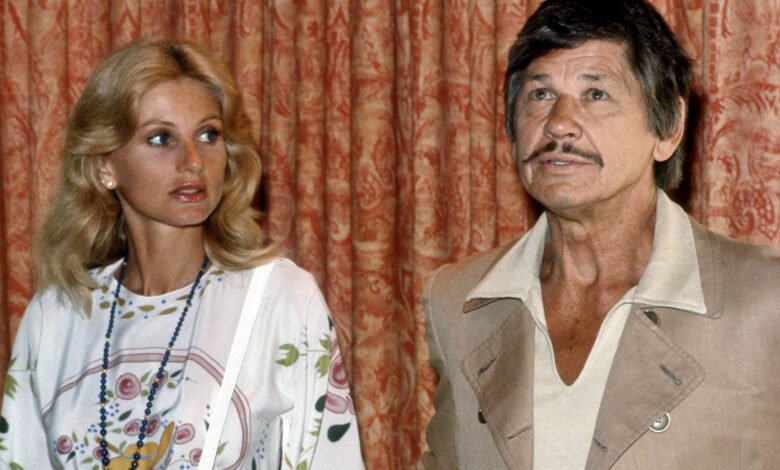
Charles Donald Fegert was an American advertising and marketing executive whose name became widely known because of his marriage to actress Barbara Eden, the beloved television star famous for playing Jeannie in I Dream of Jeannie. Although his connection to Hollywood attracted public attention, Fegert built his professional life in Chicago’s newspaper industry long before his relationship with the actress became a subject of public interest.
His story brings together business success, personal relationships, family life, and the changing world of American newspapers during the twentieth century. Unlike many people associated with celebrities, Fegert was not an actor or entertainer. He worked behind the scenes in advertising and management, helping newspapers operate in a competitive media environment.
Understanding Charles Donald Fegert requires looking beyond his famous marriage. His professional achievements, his connection to Chicago, and the limited information available about his private life all contribute to a more complete picture of the man behind the name.
Who Was Charles Donald Fegert?
Charles Donald Fegert was an American newspaper advertising executive associated with two prominent Chicago publications: the Chicago Sun-Times and the Chicago Daily News. His professional responsibilities focused on advertising, marketing, and business management rather than journalism or television production.
Fegert became particularly recognizable to entertainment audiences after marrying Barbara Eden in 1977. Eden was already an established actress, having gained international popularity through her leading role in I Dream of Jeannie. Their marriage brought together two people whose careers developed in very different professional environments.
While Eden worked in the entertainment industry, Fegert built his career in newspaper publishing. His responsibilities placed him within the commercial side of a major American media market, where advertising revenue was essential to the success of daily newspapers.
Public accounts identify him as a senior executive who advanced through advertising and marketing positions over several decades. However, detailed information about some aspects of his early life and personal circumstances remains limited, so it is important to distinguish documented career information from less certain biographical claims.
Charles Donald Fegert: Biography at a Glance
Here are the principal details commonly associated with his life.
- Full name: Charles Donald Fegert
- Birth date: November 8, 1930, according to published biographical accounts
- Birthplace: Chicago, Illinois, United States
- Nationality: American
- Profession: Advertising and marketing executive
- Industry: Newspaper publishing and advertising
- Professional associations: Chicago Sun-Times and Chicago Daily News
- Famous connection: Marriage to actress Barbara Eden
- Wedding date: September 3, 1977, according to published accounts
- Death: September 25, 2002, according to public biographical records
These details provide an overview of Fegert’s life, although not every personal detail reported online has been independently confirmed. His career and relationship with Barbara Eden remain the most prominent aspects of his public biography.
Early Life and Background
Charles Donald Fegert was born in Chicago, Illinois, in 1930. Chicago was an important center of American commerce, manufacturing, transportation, and publishing during the period in which he grew up. Its newspapers served large audiences and played a significant role in the city’s business and cultural life.
Although many online biographies describe Fegert’s upbringing as modest, comprehensive and independently verified records of his childhood are not readily available. Consequently, detailed claims about his family circumstances, schooling, and early ambitions should be treated cautiously.
What is clearer is that his professional life eventually became closely connected with Chicago’s newspaper industry. His career developed during a period when newspapers were among the most influential sources of local news and advertising.
For someone working in advertising, the newspaper business offered opportunities to develop commercial relationships, understand consumer behavior, and manage campaigns for businesses seeking to reach large audiences. These responsibilities required communication skills, commercial judgment, and an understanding of the relationship between readers, advertisers, and publishers.
Fegert’s later executive positions suggest that he developed considerable experience in this environment. Nevertheless, a responsible biography should avoid presenting unverified childhood stories as established facts.
Education and the Beginning of His Career
The early stages of Charles Donald Fegert’s career reflected the importance of sales and relationship-building in the newspaper industry. Advertising executives needed to understand what businesses wanted from newspaper campaigns and how publications could help those businesses reach potential customers.
Some biographical accounts state that Fegert attended Loyola University Chicago and earned a business degree. However, publicly available information about his educational history is not extensive enough to establish every detail with certainty.
His professional record offers a clearer picture of his development. Fegert began working in newspaper advertising and gradually moved into positions with greater responsibility. This progression illustrates how professionals could build long careers in publishing through commercial experience and management skills.
During the middle of the twentieth century, newspaper advertising was a major business. Retailers, department stores, automobile companies, and local service providers relied on print advertisements to promote their products. Successful advertising managers therefore played an important role in maintaining relationships between newspapers and the businesses that supported them financially.
Fegert’s advancement into senior management indicates that his work became significant within this commercial structure. His career also provides an interesting example of how people could achieve professional recognition outside the entertainment industry while still becoming connected to celebrity culture later in life.
Career at the Chicago Sun-Times and Chicago Daily News
Charles Donald Fegert’s professional achievements are among the best-documented aspects of his biography. He was associated with the Chicago Sun-Times and the Chicago Daily News, two important publications in the city’s newspaper history.
In 1972, a reference in the Congressional Record identified Fegert as an advertising manager associated with both newspapers. Later records described him in increasingly senior executive roles, including executive vice president of the Chicago Sun-Times in the early 1980s.
These contemporary references help establish that his career was not simply an incidental association with a famous newspaper. He held meaningful responsibilities within the commercial side of metropolitan publishing.
His Work in Newspaper Advertising
Advertising management required much more than arranging space for promotional messages. Executives had to maintain relationships with major advertisers, oversee sales teams, negotiate commercial arrangements, and help the organization meet its financial objectives.
Newspapers also competed for advertising budgets. A publication’s ability to attract readers mattered because advertisers wanted their messages to reach a substantial audience. Advertising leaders needed to understand this relationship and demonstrate the value of their publication to prospective clients.
Fegert worked during a period when print advertising was an established part of American business. Before digital advertising transformed the industry, newspaper advertisements helped consumers discover products, compare prices, and learn about local businesses.
His professional responsibilities placed him within this influential commercial environment.
Advancement Into Executive Leadership
Moving from advertising management into senior executive leadership generally requires a combination of industry knowledge, business judgment, and the ability to manage people. Fegert’s reported progression into executive positions suggests that he accumulated substantial experience throughout his career.
His association with the Chicago Sun-Times also gave him a place in the history of a major American metropolitan newspaper. Although he did not become famous for writing stories or appearing on television, his work belonged to the business infrastructure that helped newspapers operate.
This distinction is important when considering his legacy. His professional identity was based on advertising and management, while his later public recognition came largely from his personal relationship with Barbara Eden.
How Charles Donald Fegert Met Barbara Eden
The relationship between Charles Donald Fegert and Barbara Eden is the reason many people continue to search for information about him.
Barbara Eden was already a familiar face to television audiences when their paths crossed. Her performance as the magical genie in the sitcom I Dream of Jeannie had made her a recognizable entertainment figure. The show’s popularity continued to attract viewers long after its original broadcast run.
According to accounts based on Eden’s recollections, the couple met in Chicago in the 1970s. Their first encounter was reportedly not especially promising. Eden later described finding Fegert overly forceful during their initial interaction.
However, the relationship developed after their meeting. Published accounts describe a persistent courtship involving flowers, telephone calls, and repeated trips to see Eden.
Their story illustrates how relationships can begin unexpectedly. An initial impression does not always determine how two people will feel about each other over time. In their case, continued contact eventually led to a serious relationship and marriage.
It is worth remembering that most of the publicly discussed details of their courtship come from accounts of Eden’s experiences. Fegert did not leave an equally extensive public record describing the relationship from his own perspective.
Marriage to Barbara Eden
Charles Donald Fegert and Barbara Eden married on September 3, 1977, according to published biographical accounts. Their wedding brought together a successful Chicago business executive and an actress whose television career had already made her famous.
Their marriage attracted attention because Eden was a recognizable public figure, while Fegert’s career was rooted in the business world. The contrast between their professional lives made their relationship especially interesting to people who followed Eden’s career.
After their wedding, Eden reportedly moved from California to Chicago to live with Fegert. This represented a substantial change for someone whose professional commitments were closely connected with the entertainment industry.
Marriage can require significant adjustments even when both partners are committed to making it work. Differences in professional schedules, personal expectations, living arrangements, and lifestyle can create challenges that are not always apparent to outsiders.
In later years, Eden discussed the difficulties of this marriage in her memoir, Jeannie Out of the Bottle, published in 2011. Her account provides insight into her personal experience of the relationship.
The marriage ultimately ended in divorce in the early 1980s. Sources differ on whether the divorce should be dated to 1982 or 1983, so it is more accurate to acknowledge that discrepancy than to present one date as universally established.
Why Did Charles Donald Fegert and Barbara Eden Divorce?
The end of the marriage is another frequently discussed aspect of Charles Donald Fegert’s life.
In her memoir, Barbara Eden described serious problems within the relationship. Her account portrayed a marriage that became difficult and emotionally challenging. These recollections are important because they come from someone who experienced the relationship firsthand.
However, it is essential to distinguish Eden’s personal account from an independently established, complete record of the marriage. Fegert’s own perspective is not represented by an equivalent body of widely available public interviews or memoirs.
The relationship eventually ended, allowing both individuals to pursue separate lives. Eden later rebuilt her personal life and married real estate developer Jon Eicholtz in 1991.
The experience also demonstrates why celebrity marriages should not be judged solely by their public beginnings. A wedding may appear glamorous, especially when one partner is a television star, but the private realities of a relationship are more complicated than photographs and headlines can reveal.
For readers interested in Fegert, the marriage is a significant part of his biography, but it should not overshadow the professional life he established independently of Hollywood.
Charles Donald Fegert’s Children and Family Life
Charles Donald Fegert’s family life is another subject of public interest. Published biographical accounts commonly state that he had three children from earlier relationships: a daughter named Lisa and two sons named Michael and Chip.
Some accounts also describe him as a grandfather. Nevertheless, the details of his family life are less extensively documented than his professional career, and individual claims should be evaluated carefully.
Unlike celebrity families whose lives are regularly covered by entertainment media, Fegert’s children were not generally public figures in their own right. This means there is limited reliable information about their personal histories, careers, and everyday experiences.
His family relationships remain relevant to understanding the distinction between his private identity and his public reputation. Someone known primarily through a famous marriage can have an extensive personal life that receives little attention from the public.
It would be misleading to assume that a lack of publicity means that family relationships were unimportant. Instead, the limited available information suggests that much of Fegert’s family life remained outside the public spotlight.
Charles Donald Fegert’s Net Worth and Financial Status
Questions about Charles Donald Fegert’s net worth frequently appear in online searches. However, there is no widely established, independently verified figure that conclusively identifies his total wealth.
His long career in newspaper advertising and senior management suggests that he had professional earning opportunities beyond those of an ordinary entry-level employee. Executive positions at major metropolitan newspapers could provide substantial compensation, particularly during the decades when print advertising generated significant revenue.
Nevertheless, a person’s occupation alone cannot establish their net worth. A reliable calculation would require information about income, assets, property ownership, debts, investments, and other financial obligations.
Some online articles publish specific estimates of Fegert’s wealth, but those figures are not consistently supported by transparent financial documentation. They should therefore be regarded as speculation rather than confirmed facts.
The more defensible conclusion is that Fegert had a substantial professional career in newspaper advertising. His exact personal wealth at the time of his death remains uncertain.
Later Life and Death
Following his divorce from Barbara Eden, Charles Donald Fegert largely disappeared from entertainment coverage. Unlike Eden, who continued working in television and remained a recognizable public personality, he did not maintain a comparable public profile.
Available biographical accounts report that Fegert died on September 25, 2002, at the age of 71. Chicago is commonly identified as his place of death.
Beyond these basic details, reliable public information about his later years is limited. There is not enough consistently documented material to reconstruct every aspect of his activities after the marriage ended.
His relatively low public profile reflects the difference between the careers of an entertainment celebrity and a business executive. An actor may remain in the news for decades through interviews, performances, and public appearances. A newspaper executive, by contrast, may become less visible after leaving a senior position.
Even so, his professional history and connection to Barbara Eden continue to make him a subject of biographical curiosity.
The Legacy of Charles Donald Fegert
The legacy of Charles Donald Fegert rests on two main aspects of his life: his work in Chicago’s newspaper industry and his marriage to a well-known television actress.
His professional career illustrates the importance of advertising in the traditional newspaper business. Before digital platforms transformed the way companies reached consumers, advertising departments were central to the commercial success of major publications.
His advancement into senior executive roles also shows that a person could develop a significant career without seeking celebrity status. Fegert’s work was primarily connected with business operations rather than public entertainment.
At the same time, his marriage to Barbara Eden connected his name to the history of classic American television. The popularity of I Dream of Jeannie ensured that Eden remained a recognizable figure, which in turn encouraged continued interest in her personal life.
A balanced understanding of Fegert recognizes both aspects without confusing them. His marriage explains much of his public recognition, but his professional achievements existed independently of that relationship.
Frequently Asked Questions About Charles Donald Fegert
Who was Charles Donald Fegert?
Charles Donald Fegert was an American advertising and marketing executive associated with the Chicago Sun-Times and Chicago Daily News. He became widely known outside the newspaper industry through his marriage to actress Barbara Eden.
Was Charles Donald Fegert married to Barbara Eden?
Yes. Fegert married Barbara Eden on September 3, 1977. Their marriage ended in divorce in the early 1980s, although published sources differ on the precise year.
What did Charles Donald Fegert do for a living?
He worked in newspaper advertising and management. Contemporary references identify him in advertising management roles, and later accounts describe him as a senior executive associated with the Chicago Sun-Times.
Did Charles Donald Fegert have children?
Published biographical accounts commonly identify three children from his earlier relationships: Lisa, Michael, and Chip. Detailed information about their private lives is limited.
When did Charles Donald Fegert die?
Biographical records commonly give September 25, 2002, as his date of death. He was reportedly 71 years old.
What was Charles Donald Fegert’s net worth?
His exact net worth has not been reliably established in public sources. Although his executive career suggests professional financial success, specific online estimates should not be treated as verified figures.
Conclusion
Charles Donald Fegert was more than a name associated with Barbara Eden’s personal history. He was a Chicago newspaper advertising executive who developed a career in an influential industry and eventually reached senior management positions.
His marriage to Eden brought him into the public eye, but their relationship represented only one chapter of his life. His work at the Chicago Sun-Times and Chicago Daily News provides a separate reason to examine his background, particularly for readers interested in the history of American newspapers and advertising.
Although many details of his private life remain uncertain, the broad outline of his story is clear. Charles Donald Fegert occupied an important professional role in Chicago’s newspaper business, experienced a high-profile marriage, and later returned to a largely private existence.
His biography ultimately illustrates how a person’s public identity can be shaped by celebrity connections even when their own professional achievements tell a much broader story.
Do you like this personality?