FancyAI Skills: A Complete Guide to Features, Benefits, Uses, and AI-Powered Business Solutions

Introduction
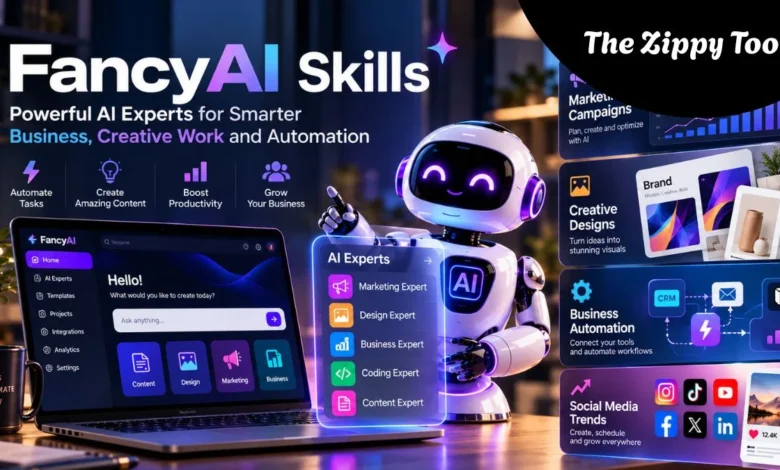
Artificial intelligence is changing the way businesses approach marketing, creativity, communication, and everyday operations. Tasks that once required several hours of manual work can now be completed more efficiently with specialized AI-powered tools. Among the platforms exploring this development is FancyAI, which focuses on combining artificial intelligence with practical business workflows. One topic attracting attention in this area is fancyai skills.
FancyAI Skills are designed to help businesses and creative professionals handle specific responsibilities through specialized AI capabilities. Instead of relying on one general-purpose chatbot for every task, the platform offers different skills that focus on activities such as customer relationship management, product launches, advertising campaigns, digital asset organization, trend monitoring, and product design.
This approach makes artificial intelligence more useful for organizations that want to connect their existing business information with creative and operational processes.
Whether someone works in e-commerce, digital marketing, fashion, advertising, or business management, understanding how FancyAI Skills operate can provide valuable insight into the future of workplace automation. This guide explores the platform, its main capabilities, potential benefits, practical applications, limitations, and important considerations for new users.
What Are FancyAI Skills?
FancyAI Skills refer to specialized AI capabilities developed to support particular business activities. Each capability is designed around a specific type of task, allowing organizations to use artificial intelligence for more focused purposes.
Traditional AI chatbots generally respond to individual questions and instructions. Users provide information, receive an answer, and manually transfer the results into their preferred applications. Although this approach is useful, it can become time-consuming when businesses need to repeat the same processes regularly.
FancyAI takes a more workflow-oriented approach. Its platform brings specialized AI agents together with business systems and creative tools. This allows teams to explore ways of automating repetitive responsibilities while maintaining access to relevant company information.
For example, an online retailer might need to prepare product descriptions, organize product photographs, develop advertisements, and communicate with existing customers. Rather than treating these activities as completely separate responsibilities, specialized AI workflows can help coordinate different stages of the process.
The main idea behind fancyai skills is to make AI assistance more practical, organized, and connected to real business requirements.
How Does FancyAI Work?
FancyAI combines specialized AI experts, individual capabilities, and integrations with existing business environments. These elements work together to support different professional workflows.
First, businesses identify the activities they want to improve. These might include preparing marketing materials, analyzing customer information, or managing digital content.
Next, they select appropriate AI capabilities and connect relevant systems where supported. Depending on the workflow, these connections may involve customer databases, product information, advertising platforms, or digital asset libraries.
The AI system can then use available information to assist with specific responsibilities. For example, customer information may help prepare personalized marketing suggestions, while product details can support the development of launch materials.
Human supervision remains important throughout this process. Employees should review generated content, verify important information, and approve decisions before using outputs in important business activities.
This combination of automation and human judgment can make business processes more efficient without removing the need for professional expertise.
Main FancyAI Skills and Their Features
FancyAI’s desktop platform currently presents several workflow-focused capabilities. Each one addresses a different business requirement.
1. CRM Workflows
Customer relationship management is essential for businesses that want to develop long-term relationships with their customers. However, analyzing customer behavior and organizing communication can require considerable time.
The CRM Workflows skill focuses on using customer information to support retention activities and personalized engagement.
Its intended applications include identifying possible customer churn signals, understanding customer interactions, and preparing re-engagement campaigns.
For example, an online store might notice that some customers have not purchased anything for several months. An AI-assisted workflow could help analyze available customer information and prepare suitable follow-up messages.
Businesses can use these suggestions to develop more relevant communication strategies. However, customer data must be handled responsibly, with appropriate permissions and privacy safeguards.
2. ERP Launch
Product launches involve several connected activities. Businesses need accurate product descriptions, specifications, marketing visuals, and promotional materials before introducing new products.
The ERP Launch skill is designed to help simplify this process.
It focuses on turning product information from enterprise resource planning systems into useful launch materials. When new inventory or product information becomes available, the workflow can assist with preparing product-related content.
Potential outputs include product specification sheets, marketing visuals, and launch assets.
This capability can be particularly useful for retailers and e-commerce companies that regularly introduce new products.
Rather than preparing every document independently, teams can use AI assistance to reduce repetitive work and concentrate on reviewing product accuracy and developing effective launch strategies.
3. DAM Library
Digital asset management is another important responsibility for modern businesses.
Companies often maintain large collections of product photographs, promotional graphics, brand logos, videos, and other creative materials. Finding the correct file can become difficult when these collections grow.
The DAM Library skill focuses on searching, organizing, and reusing approved digital assets.
Its purpose is to make existing creative resources easier to locate while supporting brand consistency.
For example, a marketing employee preparing a social media campaign may need an approved product photograph. An organized asset workflow can help identify suitable existing materials instead of requiring the team to recreate everything.
This can save time and reduce the risk of using outdated or unauthorized creative materials.
4. Campaign Drafting
Marketing campaigns require more than attractive images. They also involve planning, messaging, audience research, advertising concepts, and landing-page content.
Campaign Drafting is designed to help businesses prepare these materials through AI-assisted workflows.
It can support the creation of campaign briefs, advertising copy directions, landing-page sections, and different promotional variations.
For example, a company introducing a new skincare product might need several advertising messages for different customer groups.
An AI-assisted campaign workflow can help generate initial concepts and alternative messaging approaches. Marketing professionals can then review the suggestions and adjust them according to the company’s voice and objectives.
This makes the skill useful for teams that regularly produce promotional content.
5. Performance Creative
Advertising performance depends on several factors, including creative quality, audience preferences, messaging, and campaign timing.
Performance Creative focuses on using advertising results and successful creative concepts to develop new variations.
For example, if a particular advertisement receives strong engagement, a marketing team may want to explore alternative headlines, visuals, and promotional approaches.
AI can help generate additional creative directions based on available campaign information.
This approach may help advertising professionals experiment more efficiently while learning from previous results.
However, strong advertising performance is never guaranteed. Businesses still need to test their campaigns and evaluate actual audience responses.
6. Trend Monitoring
Digital trends can influence purchasing decisions, online conversations, and marketing opportunities.
However, keeping track of changing topics across multiple social platforms can be challenging.
Trend Monitoring is designed to help businesses follow social signals and identify emerging topics that may be relevant to their audiences.
It can assist with turning potential trends into content ideas, captions, visuals, and marketing plans.
For example, a fashion retailer may want to identify emerging styles that are attracting attention online. Trend-monitoring workflows can help the team explore relevant signals and develop content ideas.
Businesses should still verify trends before making important decisions because online popularity does not always translate into genuine customer demand.
7. Product Design
Product design requires creativity, research, experimentation, and an understanding of customer preferences.
The Product Design skill is intended to support design-related analysis and creative development.
It can help businesses explore visual directions, examine successful product aesthetics, and develop alternative design concepts.
Fashion and consumer-product companies may find these capabilities particularly interesting.
For example, a clothing brand developing a new collection could use AI-assisted analysis to explore different design directions before investing in physical samples.
Nevertheless, professional designers remain essential for evaluating functionality, originality, materials, manufacturing requirements, and final product quality.
8. Desktop Command Center
The Desktop Command Center brings different tools, files, business systems, and AI agents into a more connected working environment.
Its purpose is to help users coordinate different activities without constantly switching between disconnected applications.
For businesses that manage customer information, product records, creative assets, and marketing campaigns, having a centralized workspace can make everyday operations easier to organize.
The overall value depends on available integrations, configuration, access permissions, and the specific systems used by each organization.
Benefits of Using FancyAI Skills
Specialized AI workflows can offer several advantages when implemented correctly.
Improved Productivity
One important advantage is the potential reduction in repetitive manual work.
Employees often spend considerable time preparing similar documents, organizing files, researching campaign ideas, and transferring information between applications.
AI assistance can simplify parts of these responsibilities and allow employees to concentrate on more valuable activities.
Better Workflow Organization
Businesses frequently use multiple software applications for different purposes.
Connecting relevant information and workflows can reduce unnecessary switching between platforms.
This may improve coordination between marketing, design, sales, and operational teams.
Greater Creative Flexibility
Creative professionals often need to explore several ideas before selecting the best direction.
AI-powered capabilities can help generate alternative concepts, advertising variations, and design suggestions.
These possibilities can support brainstorming and accelerate the early stages of creative projects.
Support for Marketing Activities
Marketing teams must regularly develop content for websites, advertisements, social media, and email campaigns.
Specialized workflows can help prepare initial materials and explore different approaches.
Employees can then focus on improving messaging, understanding audiences, and evaluating campaign results.
More Consistent Brand Communication
Maintaining a consistent brand identity is important for customer recognition.
When workflows use approved creative assets and established brand guidelines, businesses may find it easier to maintain consistency across different marketing materials.
Human review is still necessary to ensure that every final asset follows company standards.
Who Can Benefit From FancyAI Skills?
FancyAI Skills may be relevant to several professional groups.
E-commerce businesses: Online retailers can explore AI assistance for product launches, product visuals, customer engagement, and promotional campaigns.
Digital marketing agencies: Marketing professionals can use specialized workflows to develop advertising concepts, campaign briefs, and creative variations.
Fashion brands: Fashion companies may benefit from design exploration, product photography workflows, and trend-related research.
Small business owners: Smaller organizations can investigate whether AI-assisted processes can reduce administrative work and simplify content production.
Creative professionals: Designers, photographers, and marketing specialists can use AI capabilities to support brainstorming and repetitive production tasks.
The suitability of the platform depends on business size, workflow complexity, technical requirements, and available resources.
FancyAI Skills vs. Traditional AI Chatbots
General-purpose AI chatbots and specialized AI workflows serve related but different purposes.
A traditional chatbot is useful for answering questions, writing drafts, explaining concepts, and brainstorming ideas. However, users may need to provide information manually and transfer the results into other applications.
FancyAI focuses more heavily on specialized capabilities and connected business workflows.
For instance, a general chatbot might help someone write a product description after receiving product information. A connected product-launch workflow aims to make the process more closely integrated with existing product information and business systems.
Neither approach is automatically better in every situation.
General chatbots remain useful for everyday questions and flexible tasks, while specialized platforms may be more appropriate for organizations that need repeatable workflows and deeper business integration.
Important Limitations to Consider
Although fancyai skills offer interesting possibilities, businesses should evaluate their limitations before depending on them.
First, AI-generated information may contain mistakes. Product specifications, customer messages, advertising claims, and other important materials should be reviewed before publication.
Second, integration requirements can influence the overall experience. Businesses may need technical assistance to connect existing systems and configure appropriate permissions.
Third, automation does not automatically produce better business decisions. Poor-quality customer information, outdated product records, or unclear instructions can lead to disappointing results.
Data privacy is another important consideration. Companies should understand how information is accessed, processed, and protected before connecting confidential business records.
Finally, pricing and feature availability should be verified directly with the platform. Public information does not necessarily establish the complete cost of every skill, integration, or enterprise deployment.
How to Get Started With FancyAI Skills
New users should begin by identifying one business problem they want to solve.
For example, an online retailer might spend too much time preparing product-launch materials. Instead of attempting to automate every department immediately, the company can investigate the ERP Launch workflow.
The next step is to understand what information the workflow requires and whether the necessary business systems are supported.
Users should then review available features, access requirements, and integration options.
After configuration, the workflow should be tested using a limited set of real-world examples. Employees can compare the AI-generated results with their existing processes and identify areas that require improvement.
Once the results are satisfactory, the business can consider expanding its use of specialized AI capabilities.
Starting with a clearly defined objective makes implementation easier to evaluate and manage.
The Future of FancyAI Skills
The development of specialized AI platforms reflects a broader change in how businesses approach automation.
Early AI applications primarily focused on answering questions, generating text, and creating images. Newer business-oriented platforms increasingly aim to connect these capabilities with real operational systems.
This development could make AI more useful for organizations that need to coordinate several activities across different departments.
In the future, specialized AI agents may become more capable of managing complex workflows, interpreting business information, and assisting with decisions that previously required extensive manual coordination.
However, responsible implementation will remain important. Businesses will need reliable data, suitable security practices, transparent processes, and human oversight.
FancyAI’s focus on specialized agents and connected workflows provides an example of this developing direction.
Frequently Asked Questions
1. What are FancyAI Skills?
FancyAI Skills are specialized AI capabilities designed to support particular business and creative workflows, including customer relationship management, product launches, advertising, digital asset management, trend monitoring, and product design.
2. Are FancyAI Skills suitable for beginners?
People familiar with everyday business software may find the platform easier to understand. However, connecting enterprise systems and configuring advanced workflows may require technical knowledge or professional assistance.
3. Can FancyAI help with marketing?
Yes. Its advertised capabilities include campaign drafting, performance creative, trend monitoring, and other marketing-related activities.
4. Is FancyAI useful for e-commerce businesses?
It may be useful for e-commerce companies that regularly manage product information, customer engagement, promotional content, and digital creative assets.
5. Does FancyAI replace human employees?
No. AI can assist with repetitive responsibilities and content preparation, but human employees remain important for strategy, creativity, quality control, and business decisions.
6. Does FancyAI support business integrations?
FancyAI advertises connections with various business and creative services, including CRM, ERP, digital asset management, advertising, and workplace applications. Actual availability should be checked before implementation.
7. Is FancyAI free to use?
Pricing and access conditions can vary between products and services. Users should consult the platform’s current pricing information or contact its sales team for accurate details.
Conclusion
FancyAI Skills represent an interesting approach to using artificial intelligence for practical business activities. Rather than focusing exclusively on general chatbot conversations, the platform emphasizes specialized capabilities that can support customer management, product launches, marketing campaigns, advertising, digital asset organization, and product design.
Its biggest potential advantage is the ability to connect AI assistance with existing business information and workflows. This could help organizations reduce repetitive tasks, improve coordination, and explore new creative possibilities.
However, businesses should evaluate integration requirements, pricing, data security, and output quality before adopting the platform for important operations.
Ultimately, the value of fancyai skills depends on how effectively they address real business problems. When combined with reliable information, appropriate oversight, and clear objectives, specialized AI workflows can become useful tools for modern organizations looking to improve productivity and prepare for an increasingly AI-driven business environment.