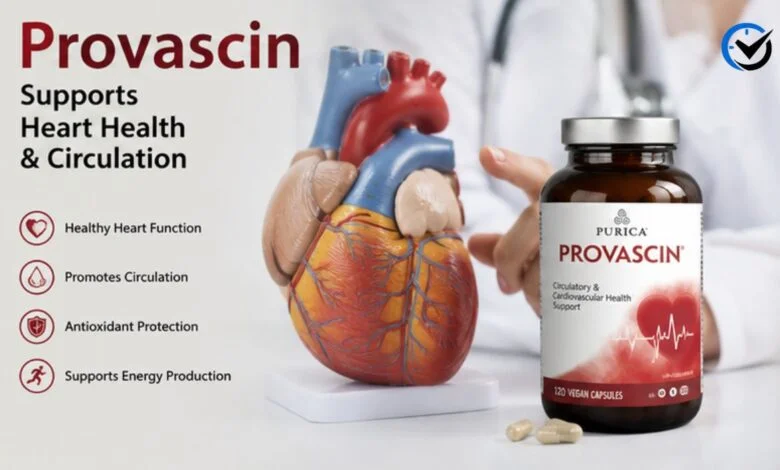
The health and wellness industry continues to introduce products designed to support different aspects of everyday well-being. From nutritional supplements to specialized wellness formulas, consumers have more choices than ever before. However, understanding what a product contains, how it is intended to work, and whether it is appropriate for individual needs is essential before making a purchasing decision. One name that may attract curiosity among people researching health-related products is Provascin.
Provascin is a keyword worth exploring carefully, particularly for readers who want to understand its potential purpose, product information, ingredients, and safety considerations. When researching a health product, it is important to distinguish between verified information, general nutritional knowledge, and marketing claims. A product’s name alone does not establish its effectiveness, medical purpose, or safety.
This article explores Provascin from a consumer-information perspective and explains how to evaluate products associated with this name responsibly.
What Is Provascin?
Provascin is best known as a multi-ingredient dietary supplement historically associated with PURICA, a Canadian natural health product brand. It was marketed primarily for cardiovascular wellness, circulation, metabolic function, and antioxidant support.
The historical product was available in capsule form, including bottles containing 120 and 240 capsules. Its formula combined nutritional compounds, botanical extracts, and mushroom ingredients.
It is important to understand that Provascin was a dietary supplement rather than an established prescription heart medication. Its marketing focused on supporting normal body functions, but that does not mean it was clinically proven to prevent or treat heart disease.
Historical retailer information and product descriptions identify PURICA as the brand associated with the best-documented version of Provascin. Reads Magazine+2
Ingredients Found in the Historical Provascin Formula
One of the most interesting aspects of Provascin is its combination of different ingredients. Each ingredient has its own nutritional or biological properties.
Historical product information identifies eight primary ingredients.
| Ingredient | Historical amount per capsule |
|---|---|
| L-Carnitine | 188 mg |
| Alpha-ketoglutaric acid | 125 mg |
| Chaga mushroom | 125 mg |
| Coenzyme Q10 | 38 mg |
| Betaine hydrochloride | 31 mg |
| Alpha-lipoic acid | 13 mg |
| Grape seed extract | 9 mg |
| Green tea extract | 9 mg |
These amounts describe the historical PURICA formula. They should not be assumed to represent every product currently advertised under the Provascin name. 7Bio+1
1. L-Carnitine
L-carnitine is a naturally occurring compound involved in the body’s energy-production process. One of its important functions is helping transport fatty acids into mitochondria, where cells can use them to produce energy.
The heart is an energy-demanding organ, which explains why L-carnitine has attracted attention in cardiovascular nutrition research.
However, research involving L-carnitine alone does not establish that a supplement containing it will improve heart health. Its effects depend on several factors, including dosage, individual health conditions, and the overall formulation.
2. Alpha-Ketoglutaric Acid
Alpha-ketoglutaric acid is a compound involved in several metabolic processes. It plays a role in the biochemical reactions that help the body process nutrients and produce energy.
Its presence in the historical Provascin formula reflects an interest in supporting normal metabolic activity.
Although this compound has been investigated in nutritional and scientific research, its inclusion does not demonstrate that Provascin can treat metabolic disorders or cardiovascular conditions.
3. Chaga Mushroom
Chaga is a mushroom traditionally used in various wellness practices. It contains naturally occurring compounds that have attracted scientific interest because of their antioxidant properties.
Antioxidants are substances that help protect cells from oxidative stress. Oxidative stress is associated with several biological processes and has been studied in connection with general health.
Nevertheless, research involving Chaga should be interpreted carefully. Laboratory findings do not automatically translate into proven health benefits in humans.
4. Coenzyme Q10
Coenzyme Q10, commonly known as CoQ10, is a naturally occurring substance found in the body’s cells.
It contributes to mitochondrial energy production and also functions as an antioxidant.
CoQ10 has received attention in nutritional research, particularly in studies examining cellular energy and cardiovascular health. However, the evidence for CoQ10 cannot be treated as proof that the complete Provascin formula provides the same effects.
5. Betaine Hydrochloride
Betaine hydrochloride is a compound commonly associated with digestive supplements. It is different from other forms of betaine used in nutritional research.
Its inclusion in the historical Provascin formula is another example of the product’s combination of different nutritional ingredients.
Consumers should pay attention to this ingredient, particularly if they have digestive conditions or use medications that affect stomach acid.
6. Alpha-Lipoic Acid
Alpha-lipoic acid is an antioxidant compound involved in cellular energy metabolism.
It has been studied for its potential relationship with glucose metabolism and oxidative stress. It is also used in certain nutritional supplement formulations.
However, individual studies do not prove that Provascin provides meaningful improvements in blood sugar control or other medical conditions.
7. Grape Seed Extract
Grape seed extract contains naturally occurring plant compounds called polyphenols, including proanthocyanidins.
These substances have antioxidant properties and have been investigated for their possible relationship with blood vessel function and general cardiovascular wellness.
Nevertheless, the available ingredient research should not be confused with clinical evidence supporting the complete Provascin product.
8. Green Tea Extract
Green tea extract is derived from green tea leaves and contains several naturally occurring plant compounds called catechins.
These compounds are commonly researched for their antioxidant properties.
Green tea extract is frequently included in wellness supplements. However, concentrated extracts are not automatically harmless, and certain formulations have been associated with liver-related safety concerns.
Consumers should always examine the actual ingredient amounts and product warnings before using concentrated botanical supplements.
Potential Benefits Associated With Provascin
Provascin was historically marketed around several wellness goals. Understanding these intended benefits helps explain why the product attracted attention.
However, there is an important distinction between a product’s advertised purpose and scientifically demonstrated results.
Cardiovascular Wellness
Cardiovascular support was one of the main purposes associated with the historical Provascin formula.
Some of its ingredients have been investigated for their roles in energy production, antioxidant activity, and other biological processes related to cardiovascular function.
However, there is insufficient product-specific clinical evidence to establish Provascin as an effective treatment for heart disease.
People with cardiovascular conditions should follow their healthcare professionals’ recommendations.
Antioxidant Support
Several ingredients in the historical formula, including Chaga, CoQ10, grape seed extract, and green tea extract, contain or contribute to antioxidant activity.
Antioxidants are important because they help protect cells against oxidative damage.
Although this provides a scientific reason for studying these ingredients, it does not establish that taking Provascin produces a specific clinical improvement.
Energy Metabolism
L-carnitine, CoQ10, and alpha-ketoglutaric acid are associated with different aspects of cellular metabolism.
These compounds help explain why the historical formulation was also discussed in connection with energy production.
However, people experiencing persistent fatigue should not assume that a supplement will solve the underlying problem. Fatigue can have many causes and may require medical assessment.
General Nutritional Support
Another potential attraction of a multi-ingredient supplement is the combination of different nutritional compounds in one product.
Some consumers prefer combination formulas because they appear convenient compared with purchasing several individual supplements.
Nevertheless, convenience does not necessarily mean greater effectiveness. The suitability of each ingredient depends on the person’s nutritional needs and health circumstances.
Is Provascin a Prescription Medication?
No. The best-documented PURICA Provascin product was marketed as a natural health or dietary supplement.
This distinction is particularly important because some online descriptions make Provascin sound like a prescription cardiovascular medication.
A supplement and a prescription medicine are not interchangeable. They have different regulatory requirements, purposes, and evidence standards.
Consumers should never use Provascin as a replacement for prescribed medication used to manage:
- High blood pressure.
- High cholesterol.
- Heart disease.
- Diabetes.
- Circulatory disorders.
Anyone receiving treatment for these conditions should speak with a qualified healthcare professional before introducing another supplement.
Possible Side Effects and Safety Considerations
Although Provascin was a supplement, that does not mean it was automatically suitable for everyone.
Its historical formula contained several active ingredients, and individual responses to supplements can vary.
Possible concerns include digestive discomfort, nausea, headaches, or sensitivity to particular ingredients. These effects are not confirmed side effects of the complete Provascin formula, but they are reasonable considerations when evaluating its components.
There are several situations in which additional caution is important.
People taking prescription medications: Some supplement ingredients can interact with medications. Anyone using blood thinners, diabetes medications, or blood-pressure treatments should obtain professional advice before considering a multi-ingredient supplement.
People with existing medical conditions: Individuals with liver, kidney, digestive, or other ongoing health problems should discuss supplement use with their healthcare providers.
Pregnant or breastfeeding individuals: The safety of a multi-ingredient formula should not be assumed during pregnancy or breastfeeding. Professional guidance is important.
People with allergies or sensitivities: Botanical extracts and mushroom ingredients may not be appropriate for everyone. Reviewing the complete ingredient list is essential.
If someone experiences an unexpected reaction after taking a supplement, they should stop using it and seek appropriate medical advice.
Is Provascin Still Available?
One important question for potential consumers is whether Provascin can still be purchased.
Historical product information confirms that PURICA previously sold Provascin in capsule form. However, its current availability appears limited, and several older retail listings identify the product as discontinued or no longer carried.
This creates an important challenge for people researching the supplement.
An old product listing does not necessarily mean that the product is still being manufactured. Similarly, an unfamiliar seller advertising something under the Provascin name does not prove that it is the original PURICA formulation.
Anyone encountering Provascin for sale should carefully examine:
- The manufacturer’s name and contact information.
- The complete ingredient list.
- The quantity of each active ingredient.
- The manufacturing and expiration dates.
- The batch number and packaging information.
- Any relevant regulatory identification.
- The seller’s reputation and product authenticity.
Avoid products with missing labels, unclear origins, or unrealistic medical promises.
How to Evaluate Provascin Before Purchasing
Making an informed purchasing decision requires more than reading promotional descriptions.
First, identify the exact product. Confirm whether the item is the historical PURICA supplement or another product using a similar name.
Second, examine the ingredient label. Historical formulas can change, and different manufacturers may use different ingredient combinations.
Third, research the available scientific evidence. Look for human clinical studies rather than relying entirely on marketing articles or testimonials.
Fourth, consider your individual health circumstances. A supplement that is appropriate for one person may be unsuitable for another.
Finally, consult a pharmacist or healthcare professional when necessary. This is particularly important if you take regular medication or have an existing medical condition.
A responsible approach helps consumers avoid unnecessary purchases and unrealistic expectations.
Why Accurate Information About Provascin Matters
The internet contains many articles about health products, but not all information is equally reliable.
Some websites repeat the same claims without providing independent research or verified product documentation. Others describe supplements as treatments for medical conditions without sufficient scientific evidence.
Provascin is an example of why consumers should examine the details behind a product rather than accepting every online description.
The historical PURICA formulation provides a starting point for understanding the product. However, its ingredients, intended purpose, and current availability should be evaluated separately.
Reliable information is particularly important when a product is associated with cardiovascular wellness because heart-related conditions can have serious consequences.
Frequently Asked Questions About Provascin
1. What exactly is Provascin?
Provascin is best known as a multi-ingredient dietary supplement historically associated with the Canadian PURICA brand. It was marketed primarily for cardiovascular, circulation, metabolic, and antioxidant support.
2. What are the main ingredients in Provascin?
The historical formula included L-carnitine, alpha-ketoglutaric acid, Chaga mushroom, CoQ10, betaine hydrochloride, alpha-lipoic acid, grape seed extract, and green tea extract.
3. Does Provascin help lower blood pressure?
There is insufficient clinical evidence establishing that the complete Provascin formula reliably lowers blood pressure. It should never replace prescribed hypertension medication.
4. Can Provascin treat heart disease?
No established clinical evidence demonstrates that Provascin treats or prevents cardiovascular disease. Anyone with heart-related health concerns should seek appropriate medical care.
5. Is Provascin safe for everyone?
No supplement is appropriate for everyone. Safety depends on the ingredients, dosage, medical history, and medications being used. Professional advice is recommended before taking a multi-ingredient formula.
6. Is Provascin still manufactured?
The historical PURICA product appears to have been discontinued or become unavailable through several established retailers. Its current manufacturing status is not clearly confirmed.
7. Is Provascin the same as a prescription heart medication?
No. The documented PURICA Provascin was a dietary supplement, not an established prescription cardiovascular medication. Similar-sounding product names should not be confused.
Final Thoughts
Provascin is an interesting example of a multi-ingredient supplement that attracted attention because of its association with cardiovascular wellness and nutritional support. Its historical PURICA formula combined eight principal ingredients, including L-carnitine, CoQ10, Chaga mushroom, alpha-lipoic acid, and several plant extracts.
Although individual ingredients have been investigated for different biological properties, the available information does not establish the complete Provascin formula as a proven treatment for heart disease, high blood pressure, or high cholesterol.
Its current availability also deserves attention, as older retail listings suggest that the original product may have been discontinued.
Ultimately, understanding Provascin requires looking beyond promotional claims. Checking product authenticity, examining ingredients, considering potential interactions, and seeking professional medical advice are all important steps. An informed consumer is better equipped to make responsible decisions about supplements and long-term health.