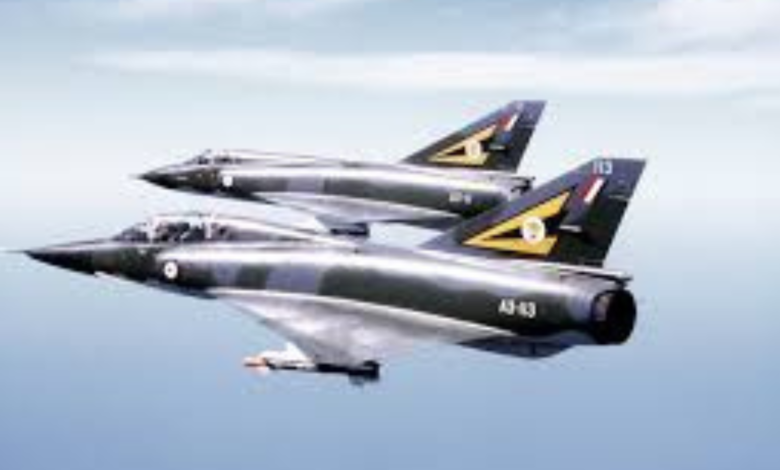
The Dassault Mirage 3 is widely recognised as one of the most revolutionary fighter jets in aviation history. Developed by French manufacturer Dassault Aviation during the 1950s, this supersonic aircraft quickly gained global attention for its impressive speed, delta-wing design, and combat effectiveness. Its development marked a significant milestone in military aviation, setting new standards for aerial manoeuvrability and engineering innovation. Over the decades, the Dassault Mirage 3 has remained a symbol of French aerospace excellence.
From the outset, the Dassault Mirage 3 was engineered to excel in both air-to-air and air-to-ground missions. Its aerodynamic design, combined with a powerful turbojet engine, allowed it to reach supersonic speeds and operate at high altitudes. This versatility made the aircraft highly desirable for many nations seeking a reliable and effective fighter jet. Even today, the Dassault Mirage 3 continues to be studied by aviation enthusiasts and military historians for its lasting influence on modern aircraft design.
Origins and Development
The Dassault Mirage 3 was conceived in the mid-1950s as part of France’s ambition to develop a high-performance supersonic fighter. Engineers focused on creating a lightweight yet robust airframe with a delta-wing configuration, which improved stability and control at high speeds. Early prototypes underwent extensive testing, addressing challenges such as engine performance, manoeuvrability, and radar integration. These rigorous trials laid the foundation for a fighter jet that would dominate the skies for decades.
Throughout its development, the Dassault Mirage 3 underwent continuous refinement. Variants were introduced to accommodate evolving operational needs, including reconnaissance missions and extended-range capabilities. French engineers incorporated feedback from initial flights to optimise the aircraft’s performance, resulting in a design that combined speed, durability, and combat readiness. This methodical approach ensured that the Dassault Mirage 3 became a reliable and versatile fighter for air forces around the world.
Design and Technical Specifications
The Dassault Mirage 3 features a delta-wing design that provides exceptional aerodynamic efficiency and agility. Its single-engine configuration delivers high thrust, allowing it to achieve speeds of over Mach 2. The aircraft is equipped with advanced radar systems for target acquisition and navigation, alongside a variety of weapons including air-to-air missiles, cannons, and bombs. These features make the Dassault Mirage 3 capable of handling multiple combat scenarios with precision and reliability.
Different variants of the Dassault Mirage 3 were developed to meet specific operational requirements. Models such as the Mirage III C, III E, and III R offered enhanced avionics, improved weapons systems, and extended range capabilities. The aircraft’s adaptability allowed it to serve in diverse roles, from interception and ground attack to reconnaissance missions. Its combination of speed, firepower, and manoeuvrability established the Dassault Mirage 3 as one of the most versatile fighter jets of its era.
Operational History
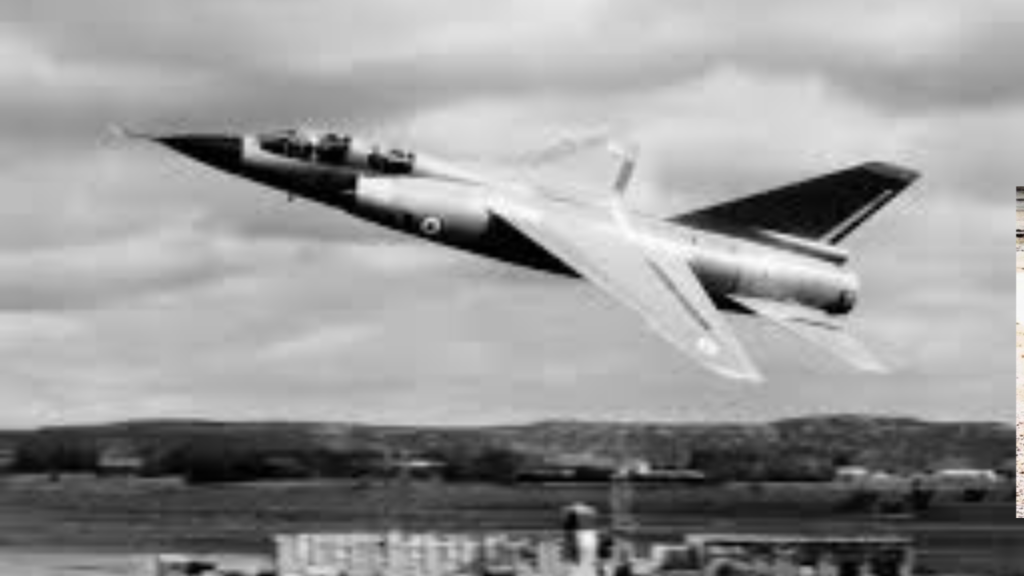
The Dassault Mirage 3 quickly gained recognition for its combat effectiveness and operational flexibility. It was deployed in several high-profile conflicts, including the Six-Day War, the Indo-Pakistani War of 1971, and various Middle Eastern operations. Its ability to achieve rapid climbs, high speeds, and superior manoeuvrability made it a formidable adversary in aerial combat. Pilots praised the aircraft for its responsiveness, reliability, and ability to maintain operational readiness in diverse environments.
Beyond combat, the Dassault Mirage 3 played a critical role in training and strategic operations for many air forces. Its robust construction and ease of maintenance made it a practical choice for extended service. The aircraft’s performance in both peacetime exercises and wartime missions solidified its reputation as a dependable fighter jet. Over time, the Dassault Mirage 3 became a benchmark for subsequent aircraft designs, influencing military aviation globally.
Global Operators and Modern Use
The Dassault Mirage 3 has been operated by numerous countries across multiple continents. France, Pakistan, Australia, Argentina, and several Middle Eastern nations relied on the aircraft for both defence and offensive capabilities. Each operator customised the aircraft to suit their military strategies, adapting avionics, weaponry, and mission roles. Despite its age, upgraded versions of the Dassault Mirage 3 continue to serve in limited capacities in some air forces today.
Modernisation programmes have extended the operational lifespan of the Dassault Mirage 3, integrating advanced avionics and missile systems to meet contemporary combat standards. While newer fighter jets dominate modern air forces, the Dassault Mirage 3 remains a valuable platform for training, heritage, and ceremonial purposes. Its enduring legacy highlights both the durability of French engineering and the timeless relevance of its design principles.
Comparison With Contemporary Fighter Jets
When compared to its contemporaries, such as the F-104 Starfighter or the Soviet MiG-21, the Dassault Mirage 3 stood out for its balance of speed, manoeuvrability, and versatility. The delta-wing configuration enabled exceptional performance at high speeds, while its compact fuselage allowed quick manoeuvres during dogfights. Many pilots considered it more responsive and easier to maintain than other jets of the same period, giving it a competitive edge in aerial engagements.
The Dassault Mirage 3 also influenced the development of subsequent aircraft, including the Mirage 5 and Mirage 2000. Its design philosophy prioritised simplicity, reliability, and effectiveness, traits that became hallmarks of French fighter jets. The aircraft’s success demonstrated that a well-engineered design could achieve both operational excellence and longevity, even amidst rapid technological advances in military aviation.
Legacy and Influence
The Dassault Mirage 3 left a lasting impact on military aviation and aerospace engineering. Its delta-wing design and supersonic capabilities inspired numerous fighter jets worldwide, influencing both performance standards and strategic approaches to aerial combat. Aviation enthusiasts celebrate the Dassault Mirage 3 for its historical significance, technical innovation, and remarkable service record across multiple countries and conflicts.
Today, the Dassault Mirage 3 can be seen in museums, airshows, and aviation collections around the world. Its enduring presence highlights the importance of innovation in aerospace engineering and the pivotal role of French aircraft in global military history. The aircraft continues to be studied and admired, ensuring that the legacy of the Dassault Mirage 3 remains strong for future generations.
Conclusion
The Dassault Mirage 3 is more than just a fighter jet; it is a symbol of innovation, speed, and aerial mastery. From its conception in France to its global operational history, the aircraft set new standards for performance and versatility. Its design, combat record, and influence on modern fighter jets have solidified its place as one of the most important aircraft in aviation history. The Dassault Mirage 3 remains a testament to French engineering and its enduring impact on military aviation.
Frequently Asked Questions
How fast can the Dassault Mirage 3 fly?
Over Mach 2, making it a supersonic fighter.
Which countries currently operate the Dassault Mirage 3?
Limited operators like Pakistan still use upgraded versions.
What are the main variants of the Dassault Mirage 3?
Mirage III C, III E, III R, and other specialised models.
How did the Dassault Mirage 3 perform in combat?
It proved highly effective in air-to-air and ground attack missions.
Why is the delta-wing design important for the Dassault Mirage 3?
It provides superior manoeuvrability and high-speed stability.
Is the Dassault Mirage 3 still in service today?
Only in limited roles with a few air forces.
How did the Dassault Mirage 3 influence modern fighter jets?
It inspired the design and performance of later supersonic aircraft.
Also Read: Advent of Islam in Kashmir