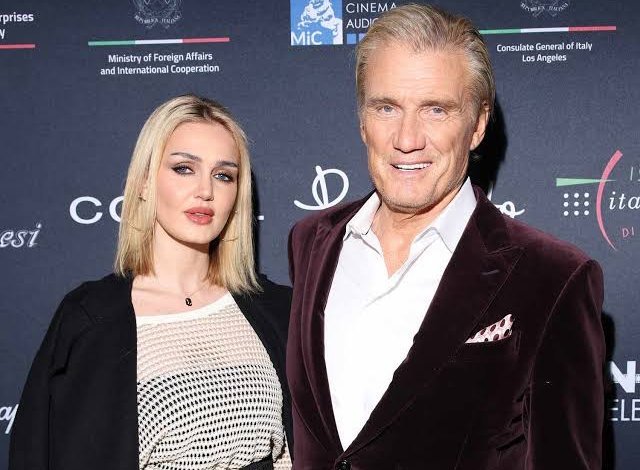
When people search for Dolph Lundgren wife, they are usually looking for information about Emma Krokdal, the Norwegian fitness professional who married the famous Swedish actor in 2023. Known around the world for action movies such as Rocky IV, The Expendables, and Creed II, Lundgren has spent decades in the spotlight. His personal life, however, has often attracted just as much curiosity as his film career.
Emma Krokdal became an important part of Lundgren’s life after the two met in Los Angeles. Their relationship eventually developed into a serious partnership, and they married in a private ceremony in Greece after several delays. Their story has also received attention because of their significant age difference, but the couple has repeatedly presented their relationship as one built around companionship, fitness, family, and mutual support.
The couple’s marriage also took place during a particularly challenging period in Lundgren’s life. The actor had been dealing privately with cancer for years before publicly discussing his diagnosis and treatment. Throughout that difficult chapter, Krokdal was described as a major source of support. That background helps explain why their relationship has become more than just another celebrity romance in the public eye.
Who Is Dolph Lundgren’s Wife?
Dolph Lundgren’s wife is Emma Krokdal, a Norwegian-born fitness professional and personal trainer. Krokdal developed her career around health and fitness and eventually made Los Angeles her home. While she has connections to the entertainment world through her marriage, her own professional identity has largely been associated with exercise, wellness, and an active lifestyle.
Krokdal’s background is interesting because she reportedly had ambitions connected to acting when she was younger but ultimately pursued fitness. Her professional path brought her into the Los Angeles fitness scene, where she eventually crossed paths with Lundgren. Unlike many celebrity relationships that begin through Hollywood parties or film projects, their meeting reportedly happened in a gym, making fitness a natural point of connection from the beginning.
Over time, Krokdal became a familiar presence alongside Lundgren at public events and during family occasions. She has appeared with him on red carpets and has also been photographed with members of his family. Her role in his life is therefore not simply that of a celebrity spouse. She is also his partner, workout companion, and someone who has shared some of the most difficult personal experiences of his later years.
How Did Dolph Lundgren and Emma Krokdal Meet?
The story of how Dolph Lundgren and Emma Krokdal met is surprisingly straightforward. The two crossed paths at an Equinox gym in West Hollywood, an environment that suited both of their interests in fitness and training. Lundgren later recalled that he was looking for the boxing room when he approached Krokdal, initially believing she might be a trainer.
That first encounter eventually led to a friendship and then a romantic relationship. One detail that makes their early connection especially interesting is that Krokdal reportedly did not know much about Lundgren’s acting career when they first met. Lundgren was already internationally famous, but their relationship was not initially based on the image of a Hollywood action star.
That allowed the relationship to develop on a more personal level. Instead of meeting with the expectations that can come with celebrity status, they had an opportunity to get to know one another more naturally. Their shared interest in health and exercise also gave them something practical in common, which became a continuing part of their life together.
When Did Dolph Lundgren and Emma Krokdal Get Married?
Dolph Lundgren and Emma Krokdal married in July 2023 in Mykonos, Greece. The ceremony was described as an intimate celebration held at their villa, surrounded by family members and close friends. Rather than choosing an enormous celebrity wedding, the couple opted for something more personal and private.
Their wedding was not the first date they had considered for getting married. Lundgren and Krokdal became engaged in 2020, but their plans were delayed by several difficult circumstances. The COVID-19 pandemic disrupted travel and wedding arrangements around the world, while Lundgren’s long medical journey also affected their ability to move forward with their original plans.
When they finally exchanged vows, the event represented more than a traditional wedding celebration. The couple had already experienced significant challenges together, making the ceremony feel like a celebration of their relationship and the opportunity to look toward the future. Their decision to marry in Mykonos also gave the occasion a relaxed Mediterranean setting away from the intense attention that often surrounds Hollywood weddings.
The Age Difference Between Dolph Lundgren and Emma Krokdal
One of the most frequently discussed aspects of the relationship is the age difference between Dolph Lundgren and Emma Krokdal. The couple have a significant age gap of roughly four decades, which has naturally attracted attention from fans and entertainment media.
Lundgren has addressed the subject publicly and has emphasized that he considers Krokdal mature for her age. He has also suggested that his own career and lifestyle have kept him active and connected to younger generations. For the couple, however, the age difference appears to be less important than the qualities they value in their relationship.
Age gaps in relationships involving celebrities often become a major talking point because the public tends to focus on numbers. In everyday life, however, a successful partnership depends on many other factors, including communication, shared interests, trust, and the ability to support each other during difficult moments. In Lundgren and Krokdal’s case, their shared commitment to fitness and their experience navigating serious health challenges together have become important parts of their story.
Emma Krokdal’s Role During Dolph Lundgren’s Cancer Battle
Perhaps the most significant chapter in the couple’s relationship has been Lundgren’s battle with cancer. In 2023, the actor revealed that he had privately been dealing with kidney cancer for several years. He had initially been diagnosed after doctors discovered a tumor in his kidney, and further medical developments later made the situation considerably more serious.
The revelation surprised many fans because Lundgren had continued working and maintaining his public image as an exceptionally fit action star. Behind that image, however, he was dealing with a major health challenge. His decision to speak publicly about his experience also helped raise awareness about the importance of medical monitoring and paying attention to unexpected symptoms.
Krokdal was an important source of support during this period. Lundgren has spoken positively about her presence in his life and described her as someone who stood by him during an extremely difficult time. Their relationship was tested by circumstances that had little to do with Hollywood or celebrity life, and the experience appears to have strengthened their appreciation for each other.
Dolph Lundgren and Emma Krokdal’s Family Life
Family is another important part of the couple’s story. Dolph Lundgren has two daughters, Ida and Greta, from his previous marriage to Anette Qviberg. His daughters grew up largely in Europe, away from the constant attention that can come with having a famous father in Hollywood.
Krokdal has also developed a relationship with Lundgren’s daughters. The family has occasionally been seen together at public outings, showing that the relationship extends beyond the couple themselves. While the family generally maintains a relatively private lifestyle, occasional public appearances have offered glimpses of their connection.
This aspect of Lundgren’s life is worth noting because celebrity relationships can sometimes be discussed as if they exist in isolation. In reality, long-term partnerships often involve blending different parts of family life. For Lundgren and Krokdal, that has meant building a relationship while also maintaining connections with his adult daughters and navigating the responsibilities that come with a modern family.
What Does Emma Krokdal Do for a Living?
Emma Krokdal is known professionally as a personal trainer and fitness expert. Her career fits naturally with the lifestyle she shares with Lundgren, who has maintained an intense interest in physical training throughout his career as an action star.
Fitness has always been an important part of Lundgren’s professional identity. His roles often require a high level of physical preparation, and his martial arts background has also influenced the way he approaches exercise. Having a partner who understands training and wellness can therefore be especially valuable for someone whose career depends heavily on staying physically capable.
Krokdal’s own professional interests also give her an identity separate from being known simply as “Dolph Lundgren’s wife.” Although her marriage has increased public interest in her life, her work in fitness remains a central part of her personal and professional profile. That distinction is important when looking at celebrity spouses, as many have successful careers and interests of their own beyond their relationships.
Dolph Lundgren and Emma Krokdal’s Life After Marriage
Since their wedding, Lundgren and Krokdal have continued to appear together publicly from time to time. They have traveled, attended events, and been photographed enjoying everyday activities. Their public appearances tend to be relatively low-key compared with the highly publicized relationships of some other Hollywood couples.
The couple also shared an important milestone in 2024 when they became U.S. citizens. Lundgren, who was born in Sweden, had spent many years living and working in the United States. Krokdal was born in Norway, making their naturalization ceremony a notable moment for both of them.
Their life together appears to combine several different worlds. They have European roots, a long connection to Los Angeles, a shared interest in fitness, and a family that includes Lundgren’s two adult daughters. Those experiences have helped shape a relationship that is broader than the Hollywood spotlight might suggest.
Why Fans Are Interested in Dolph Lundgren’s Wife
Searches for Dolph Lundgren wife continue to attract attention because Lundgren remains a recognizable figure across multiple generations. Older fans know him best as Ivan Drago from Rocky IV, while newer audiences may recognize him from The Expendables, Creed II, superhero films, and other action projects.
His marriage to Krokdal also represents a different chapter in his life. For decades, Lundgren was primarily known for his muscular action-hero image. As he has grown older, public interest has increasingly shifted toward his family, health, relationships, and personal experiences outside the movie set.
There is also a natural curiosity about the woman who has been beside him through such a significant period. Krokdal’s presence during his cancer journey, their decision to marry after delays, and their life as a couple have all contributed to public interest. At the same time, the couple appears to maintain enough privacy to keep their relationship from becoming a constant tabloid spectacle.
Final Thoughts on Dolph Lundgren and Emma Krokdal
The story of Dolph Lundgren wife ultimately leads to Emma Krokdal, a Norwegian-born fitness professional who became Lundgren’s partner and, in 2023, his wife. Their relationship began with a chance meeting at a Los Angeles gym and developed into a long-term partnership that has included an engagement, a delayed wedding, family life, and major health challenges.
Their marriage has attracted attention for several reasons, especially the couple’s substantial age difference and Lundgren’s international celebrity. Yet the most meaningful part of their story may be the support they have shown each other away from the cameras. Lundgren’s cancer battle brought an especially serious dimension to their relationship, and Krokdal’s support during that period has been widely acknowledged.
Today, Emma Krokdal is best understood not simply as a celebrity wife but as an individual with her own professional background and interests. Together, she and Lundgren have built a life that brings together fitness, family, travel, and a shared commitment to making the most of their time together. For fans searching for information about Dolph Lundgren wife, Emma Krokdal’s story offers a fascinating look at the personal life behind one of Hollywood’s most recognizable action stars.