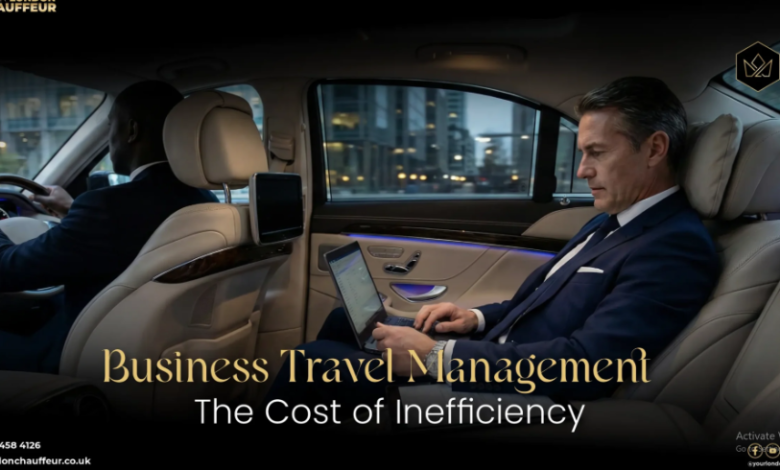
Corporate leaders in global financial hubs operate on meticulously scheduled itineraries where minutes translate directly into capital. Yet, a frequently overlooked area of corporate leakage lies in inefficient logistics. Effective business travel management is no longer just about booking flights and securing hotel accommodations; it encompasses the granular details of moving C-suite personnel seamlessly through highly congested urban environments like London. For executives navigating between boardrooms in Canary Wharf, client meetings in Mayfair, and international departures from Heathrow, the hidden costs of substandard transit arrangements accumulate rapidly.
The resulting friction—manifesting as lost billable hours, compromised confidentiality, and heightened stress—can severely undermine corporate objectives. Relying on fragmented or ad-hoc transit solutions exposes companies to unnecessary variables. This comprehensive guide explores the multi-faceted landscape of high-level corporate logistics, examining why strategic foresight is critical. By analyzing industry trends, duty of care obligations, and real-world efficiency metrics, we will outline how specialized executive transportation serves not merely as an operational cost, but as a strategic asset. Investing in streamlined ground transit ensures that highly compensated professionals remain productive, secure, and focused on driving revenue.
The Impact of Poor Business Travel Management
When ground transportation is treated as an afterthought, the financial and operational repercussions extend far beyond the price of a cab fare. Organizations must look at the holistic impact of transit delays on their executive team.
Financial Drain on Corporate Budgets
The most immediate consequence of inadequate business travel management is the direct financial drain caused by unoptimized routing and surge pricing. Ride-hailing applications frequently implement dynamic pricing during peak hours—exactly when executives need to travel for morning meetings or evening networking events. Furthermore, when an executive misses a scheduled train or flight due to a delayed vehicle, the cost of rebooking premium-class travel creates a cascading financial burden that could have been avoided with proactive logistical planning.
Opportunity Cost for London Executives
Beyond direct expenditures, the opportunity cost is staggering. Consider an executive whose billable rate or equivalent value generation is £1,000 per hour. If they spend forty-five minutes waiting for unreliable transport or navigating a complicated pickup point outside a busy terminal, the company incurs a severe invisible cost. High-level executive transportation is designed to eliminate this downtime, allowing executives to seamlessly transition from the boardroom to the vehicle, utilizing the transit time for confidential calls or final presentation reviews in a private, secure environment.
Analyzing Executive Transportation Options
To mitigate transit friction, procurement officers and travel managers must understand the critical differences between consumer-grade transit and tailored corporate solutions.
Why Standard Transit Fails the C-Suite
Standard public transit or on-demand ride-hailing services are built for volume, not for precision. They lack the necessary guarantees required for high-stakes corporate movements. Drivers of standard services are rarely bound by strict non-disclosure agreements (NDAs) and vehicles are not optimized as mobile workspaces. For an executive conducting a sensitive M&A discussion on the way to the Square Mile, the lack of acoustic privacy in a standard vehicle presents a tangible corporate risk.
The Reliability Metric in Business Travel Management
Reliability in this sector is measured by proactive contingency planning. A cornerstone of effective business travel management is the assurance that a vehicle will be waiting precisely when and where it is needed, regardless of changing flight schedules or prolonged meetings. Premium services employ dedicated dispatch teams and real-time flight tracking, ensuring that the ground logistics adapt fluidly to the executive’s dynamic schedule, rather than forcing the executive to adapt to the transport provider.
Hidden Variables in Corporate Transit
Operating within a metropolis like London presents unique logistical hurdles that require specialized local knowledge and strategic foresight.
Navigating Central London Congestion
London’s infrastructure is notoriously complex, characterized by the Ultra Low Emission Zone (ULEZ), the Congestion Charge zone, and numerous Low Traffic Neighbourhoods (LTNs). A driver relying solely on consumer GPS may find themselves routed into gridlock. Professional executive chauffeurs leverage advanced, commercial-grade routing technologies combined with intimate street-level knowledge to bypass bottlenecks, ensuring that VIPs arrive at high-priority engagements without unnecessary delays.
The Hidden Fees of Ride-Hailing Algorithms
While ride-hailing apps appear cost-effective on paper, the lack of fixed pricing introduces budget volatility. Corporate accounts subjected to algorithmic surge pricing experience unpredictable billing cycles, complicating expense reporting. A mature approach to business travel management favors transparent, fixed-rate service level agreements (SLAs) that allow finance departments to accurately forecast travel expenditures for the fiscal year.
Core Pillars of Business Travel Management
A robust corporate travel policy must integrate ground transportation as a foundational element, rather than a peripheral add-on.
Seamless Itinerary Integration
The modern travel ecosystem requires seamless integration between the Travel Management Company (TMC), the executive assistant, and the ground transport provider. High-level executive transportation providers offer API integrations and dedicated account managers who sync directly with the executive’s calendar. If a flight is delayed in New York, the corresponding ground pickup in London is automatically adjusted without requiring manual intervention from the passenger.
Enhancing Executive Productivity
Vehicles utilized for corporate transit are essentially extensions of the executive office. Equipped with high-speed Wi-Fi, multi-device charging ports, and privacy partitions, these environments allow executives to reclaim lost hours. Integrating these mobile workspaces into a company’s business travel management strategy directly boosts overall productivity, turning historically dead time into active, billable hours.
Comparing High-Level Transit Solutions
When evaluating options for corporate mobility, decision-makers must weigh the benefits of various premium services against their specific operational requirements.
Taxis vs. Private Chauffeurs
While London’s iconic black cabs offer the advantage of bus lane access and exceptional driver knowledge (The Knowledge), they are designed primarily for short, transactional trips. They lack the sustained comfort and tailored amenities required for extended roadshows or multi-stop itineraries. Conversely, private chauffeur services are booked by the hour or day, providing an on-call asset that remains at the executive’s disposal, holding luggage securely and offering a consistent, high-end environment throughout the day.
Assessing the Value of Private Executive Fleets
Maintaining an in-house fleet of executive vehicles is often prohibitively expensive due to depreciation, insurance, and driver payroll. Outsourcing to established professionals offers a leaner alternative. For instance, utilizing recognized specialists like Your London Chauffeur provides organizations with access to a pristine fleet of luxury vehicles without the overhead of asset management. This allows companies to scale their transport needs dynamically, aligning with corporate demands while maintaining impeccable service standards.
Best Practices for Corporate Travel Planning
Structuring a travel policy requires balancing budgetary constraints with the safety and well-being of the personnel.
Prioritizing Corporate Duty of Care
Duty of care is a legal and moral obligation for employers to ensure the safety of their staff while traveling for business. Relying on unvetted gig-economy drivers creates a blind spot in corporate liability. A sophisticated business travel management policy strictly mandates the use of fully licensed, commercially insured, and rigorously background-checked drivers. This guarantees compliance with corporate safety standards and provides peace of mind for both the traveler and the organization.
Selecting Specialised Logistics Partners
When auditing potential ground transport vendors, travel managers should look for ISO certifications, comprehensive service level agreements, and detailed reporting capabilities. The ideal partner functions as an extension of the corporate travel department, providing detailed monthly analytics on usage, route efficiency, and cost savings, thereby enabling continuous optimization of the travel budget.
The Future of Executive Travel Logistics
The landscape of corporate mobility is rapidly evolving, driven by environmental mandates and technological advancements.
ESG Compliance and Electric Vehicle Fleets
Environmental, Social, and Governance (ESG) criteria now heavily influence corporate procurement. Companies are under increasing pressure to reduce their Scope 3 emissions, which includes corporate travel. The transition toward luxury electric vehicles (EVs), such as the Mercedes-Benz EQS or BMW i7, is a critical trend in business travel management. Forward-thinking operators, including Your London Chauffeur, are increasingly integrating premium zero-emission vehicles into their fleets, allowing corporate clients to maintain elite travel standards while actively reducing their carbon footprint.
Data-Driven Business Travel Management
Artificial Intelligence and predictive analytics are transforming how routes are planned. By analyzing historical traffic data, weather patterns, and major city events, transport providers can predict congestion before it occurs. This proactive approach to executive transportation ensures an unparalleled level of reliability, minimizing the risk of disruptions during critical financial roadshows or international delegation visits.
Maximizing ROI on Premium Travel Investments
Viewing executive transport strictly as a cost center is a fundamental management error. When executed correctly, it is a high-return investment.
Transforming Transit Time into Billable Hours
The Return on Investment (ROI) of premium executive transportation is calculated by the time saved and the work completed in transit. An uninterrupted hour in the back of a chauffeur-driven vehicle allows an executive to prep for negotiations, finalize contracts, or rest between grueling transatlantic flights. This optimization of human capital far outweighs the marginal cost increase over standard transport.
Elevating Corporate Brand Image
First impressions in business are often indelible. Arriving at a high-stakes negotiation or a VIP client meeting in a pristine, executive-class vehicle projects an image of stability, professionalism, and attention to detail. The consistency of the experience reinforces the company’s own brand prestige. Ensuring that the logistics match the caliber of the personnel is a vital component of holistic business travel management.
Frequently Asked Questions
How can I find a reliable chauffeur near me for corporate needs?
When searching for a “chauffeur near me” for business purposes, it is essential to look beyond basic proximity. Prioritize established corporate transportation providers that operate comprehensively across your required city. Professional services offer guaranteed availability, dedicated account management, and advanced booking systems, ensuring that a fully vetted driver is dispatched to your exact location, rather than relying on the random availability of local, on-demand drivers.
How much does a chauffeur cost?
The cost of a professional chauffeur varies based on the vehicle class, duration of hire, and specific service requirements. Typically, executive chauffeur services in London charge hourly rates ranging from £50 to £90, often with a minimum hire period of three to four hours. Daily rates for financial roadshows or multi-stop itineraries usually range between £400 and £800. Corporate accounts may also benefit from negotiated fixed rates and tailored SLA pricing models.
What is included in a chauffeur service?
A premium chauffeur service provides a comprehensive, end-to-end travel experience. This includes a luxury, late-model vehicle, a professionally attired and licensed driver, fuel, standard tolls, and comprehensive insurance. In-vehicle amenities typically feature complimentary bottled water, Wi-Fi access, multi-device chargers, and daily newspapers. Additionally, the service encompasses behind-the-scenes logistics such as real-time flight tracking, route optimization, and dedicated wait times.
Are chauffeurs available for airport transfers?
Yes, airport transfers are a fundamental pillar of executive transportation. Professional chauffeur services monitor flight arrivals in real-time to adjust for early landings or delays. The service typically includes an executive meet-and-greet inside the arrivals hall, complete with a customized name board, baggage assistance, and a complimentary waiting period (usually 45 to 60 minutes post-landing) to allow passengers ample time to clear customs and immigration seamlessly.
What vehicles do chauffeur companies provide?
Top-tier chauffeur companies maintain a diverse fleet of luxury vehicles tailored to different corporate needs. Standard executive sedans often include the Mercedes-Benz E-Class or BMW 5 Series. For elevated VIP transit, the Mercedes-Benz S-Class, BMW 7 Series, or Range Rover Autobiography are preferred. For group travel or roadshows, luxury MPVs like the Mercedes-Benz V-Class are utilized. Many providers are also rapidly expanding their fleets to include high-end electric vehicles (EVs) to meet corporate ESG targets.
How do I choose a professional chauffeur service?
Selecting the right provider for business travel management requires auditing their credentials. Ensure the company and its drivers hold valid licensing (such as TfL in London). Review their fleet age and condition; vehicles should ideally be under three years old. Look for companies that offer dedicated corporate account management, transparent billing, robust duty of care compliance, and demonstrable experience in handling complex corporate itineraries such as financial roadshows and diplomatic transport.
Rethinking Corporate Travel Logistics
In the highly competitive arena of global commerce, logistical friction is an unacceptable vulnerability. Treating ground transit as an improvised necessity rather than a strategic asset leads to measurable financial losses and diminished executive performance. Comprehensive business travel management requires a paradigm shift—recognizing that the journey between the airport, the hotel, and the boardroom is as critical to corporate success as the meetings themselves.
By prioritizing premium executive transportation, organizations safeguard their most valuable asset: the time and focus of their leadership team. Implementing structured travel policies that mandate vetted, reliable, and secure transit partners ensures compliance with duty of care obligations while actively supporting corporate ESG initiatives. Ultimately, removing the unpredictability of urban transit allows executives to operate at peak efficiency, transforming necessary travel from a logistical burden into a seamless extension of the corporate workspace.