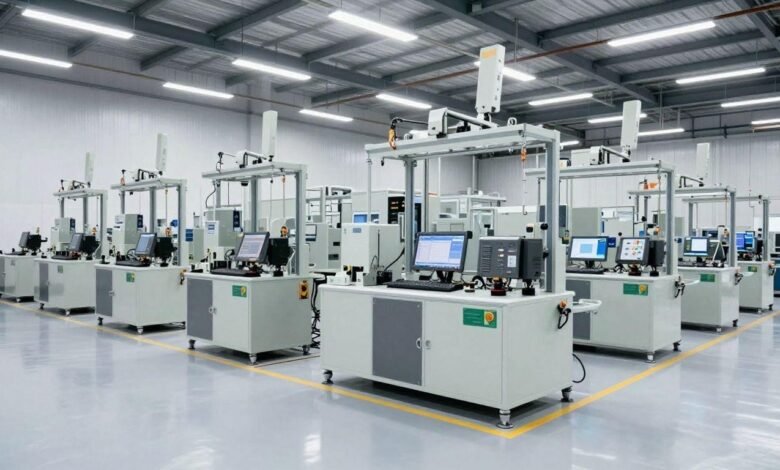
Modern companies often view the acquisition of assets as a primary driver of long-term efficiency. By utilizing different fiscal pathways, businesses can maintain their competitive edge without sacrificing stability. This strategic shift reflects a broader trend of optimizing operational costs across the board.
Defining equipment financing in modern business
Equipment financing represents the process of obtaining capital specifically for necessary machinery or technology. Rather than purchasing these items outright, businesses may access them through agreements that facilitate immediate usage while deferring the full cost. Pathward, as an example, provides specialized financing programs designed to help companies manage asset acquisition effectively by aligning costs with organizational goals.
This method allows entities to overcome the barriers associated with sudden, large-scale hardware deployments. By focusing on the utility of the item rather than total ownership metrics, firms can pivot their strategies quickly in response to shifting industry demands. It effectively converts a massive, one-time obligation into a predictable periodic payment that does not overwhelm standard cash flow.
Furthermore, this approach ensures that companies do not remain stuck with obsolete tech for too long. Since upgrades are often part of the cycle, staying at the forefront of operational capacity becomes easier for scaling organizations. This flexibility is fundamental to maintaining a lead in any fast-paced commercial environment.
Distinction between leasing and conventional loans
Leasing functions differently from traditional loans, primarily focusing on the use of assets rather than immediate full ownership. In a lease agreement, the lessor retains ownership while the business makes periodic payments to use the equipment. This structure is often chosen when the goal is to update items frequently without the burden of disposal.
Conversely, a traditional loan typically involves borrowing a lump sum to purchase the equipment outright. Once the debt is cleared, the business holds full title to the asset. This route is typically preferred if the owner intends to maintain a single set of machinery for an extremely long period without any major technological updates.
Selecting the right model depends entirely on the long-term intent of the company. If maintaining a technologically modern, streamlined production line is the priority, a lease might be the superior choice. On the other hand, for heavy manufacturing items that last decades, a standard loan might offer a clearer path to total asset equity.
How financing models impact balance sheet reporting
Financing choices significantly influence a firm’s financial statements through how liabilities and asset ownership are reflected. Accountants often group these structures into distinct categories for reporting purposes, which determines whether the equipment appears as an asset or as a service expense. This distinction is crucial for investors assessing the company’s fiscal leverage.
When a firm enters a capital lease, the asset and the liability are often reported directly. This indicates that the company is effectively financing its core infrastructure over time. It can increase total debt figures, though it also signals to stakeholders that management is actively investing in the company’s productive capacity.
In contrast, operating leases might appear differently on the books, often treated as operating expenses under certain conditions. This can help preserve favorable efficiency ratios by keeping the debt levels lower. Understanding these nuances allows financial teams to optimize their financial presentation when working with partners like Crest Capital to secure the necessary backing.
The role of working capital in business health
Maintaining a healthy balance of liquid assets allows a company to navigate periods of instability with confidence. Operations require a steady flow of cash to cover day-to-day variables such as payroll, supply chains, and unforeseen disruptions. Without this buffer, even profitable companies may find themselves unable to react as market conditions change.
Defining working capital and its liquidity benefits
Working capital is fundamentally the difference between an organization’s current assets and its current liabilities. It represents the cash on hand available to fund daily operations and maintain momentum. Having a surplus of this capital provides a safety net that protects the business from sudden shocks in revenue or cost increases.
Liquidity is the ultimate arbiter of survival during lean quarters, and it also dictates the speed of reaction to market opportunities. When a company keeps its liquidity high, it can easily afford to hire top talent or adjust its supply strategy at a moment’s notice. This agility is what sets stable firms apart from those constantly living on the edge.
Moreover, high liquidity scores often translate into better bargaining power with suppliers. Vendors are more likely to offer favorable volume discounts if the company can settle accounts promptly without waiting for extended credit terms. This virtuous cycle reinforces the broader fiscal health and stability of the entire operation.
Risks of depleting cash reserves for long-term assets
Tying up cash in inanimate machinery creates significant danger if the business hits a sudden downturn. Once the cash is transformed into hard equipment, it becomes difficult to convert back into liquid funds quickly. This lack of access can leave a firm vulnerable to temporary problems that require immediate cash inputs.
If all internal resources are focused on buying inventory or hardware, there is little scope for correcting potential mistakes. Market shifts or supply chain delays could drain the remaining reserves entirely. Many leaders fail to see these hidden costs until they are already facing a crisis of confidence in their own financial security.
This scenario highlights the importance of keeping essential cash reserves separated from long-term capital investments. Protecting that liquidity means the company can continue its regular activities during difficult phases. By avoiding the depletion of savings for permanent assets, the firm stays ready to thrive rather than just survive.
Maintaining operational agility through diligent cash preservation
Operational agility is a core competitive advantage that allows teams to pivot quickly. This agility depends entirely on the ability to deploy resources toward the most pressing needs at any given hour. Efficient cash management strategies allow leaders to keep their focus on growth and innovation.
Consider the following practices for keeping operations flexible:
- Diversifying funding sources for massive asset purchases.
- Monitoring the cost of capital across different financial instruments.
- Keeping distinct budgets for long-term production and short-term survival.
- Utilizing automated systems to track daily cash outflows efficiently.
By following these procedures, companies ensure that their movement is never restricted by a lack of funds. Diligent tracking and separate budgeting allow for a clearer view of what is actually available. This control is the hallmark of a mature business that understands the value of waiting for the right moment to spend.
Mechanisms for preserving cash through equipment financing
Preserving capital requires a deliberate approach to sourcing and deploying assets. Instead of paying out large amounts for single purchases, firms can opt for plans that spread the cost over several years. This technique is a common way to bolster current liquid reserves.
Avoiding significant upfront capital outlays
By leveraging credit instead of cash, small and mid-sized enterprises can preserve their precious reserves. Large down payments often drain months of profit, limiting the business’s ability to act during emergencies. When an agreement covers nearly all costs, the organization keeps its cash internal.
This strategy is particularly effective for those seeking to scale up their technology or manufacturing capacity rapidly. Keeping cash on hand allows the company to invest in other growth areas, such as professional development or office improvements. This is how expansion is managed without triggering a potential cash-flow crunch.
Furthermore, companies can avoid the depreciation risks associated with purchasing assets that decline in value quickly. If the agreement provides for timely upgrades, the company effectively offloads the risk of holding dated, less-productive hardware. This keeps the operation running at peak performance without constant cash drains.
Matching repayment schedules to revenue generation cycles
Effective financing allows payments to align with when the company expects to generate revenue from the newly acquired asset. This synchronization ensures that the equipment pays its own way. It turns a large fixed cost into a manageable operational expense that matches the production timeline.
Different companies have different seasonal peaks and troughs, and a well-structured agreement reflects this variance. Some lenders allow for deferred payment cycles, providing space for the business to start generating profits from the gear. This flexibility is essential for startups and companies handling a seasonal influx of customer orders.
By smoothing out the repayment timeline, the company avoids having to pay large lump sums during notoriously slow business months. This alignment provides a layer of predictability that keeps morale high and prevents panic during naturally quiet periods. It makes fiscal planning a strategic exercise rather than a desperate attempt to cover bills.
Maximizing tax advantages such as Section 179 deductions
Businesses can often leverage various tax incentives to reduce the cost of essential investments. Section 179 is a common vehicle that allows firms to deduct the purchase price of qualified equipment from their gross income. Understanding these codes is essential for maximizing the value of any recent acquisition.
For most businesses, these deductions can drastically lower the actual cost of ownership over time. When used correctly, they free up additional cash that can be reinvested into other growth branches of the organization. Working with finance specialists like First American Equipment Finance ensures these benefits are handled correctly within the documentation.
Below is a comparison of typical costs without vs. with tax-advantaged financing impacts for a sample $100k asset acquisition:
| Feature | Conventional Buy | Financed With Tax Benefit |
| Upfront Cash Requirement | $100,000 | $0 – $5,000 |
| Annual Cash Drain | Minimal (once) | Medium (periodic) |
| Tax Deduction Potential | Limited | Significant/Immediate |
These indicators demonstrate how managing the tax strategy can shift the entire profile of an investment. By focusing on the net after-tax cost rather than the gross price, companies make much smarter decisions about their current purchasing power. It is about understanding the real cost to the business over a full lifecycle.
Evaluating financing structures for your business needs

Choosing the right structure is just as important as choosing the equipment itself. Different terms and conditions apply that can drastically change the final cost to the firm. A thorough evaluation of these variables ensures the company chooses an agreement that fits its unique long-term plans.
Capital leases versus operating lease structures
Capital leases are essentially long-term obligations that look like ownership on paper. They are typically used for heavy machinery that the company expects to hold until it is completely worn out. Operating leases, however, are essentially service contracts that keep the assets off the balance sheet while providing usage.
An operating lease is perfect for tech firms or businesses that need to rotate equipment every few years. It keeps the asset risk low because the user isn’t stuck with the item when it inevitably becomes old or inefficient. This is a common strategy for maintaining a light and agile balance sheet.
On the other hand, a capital lease makes more sense if the asset is meant to be a permanent fixture in the factory. It allows for the gradual amortization of the total cost, which might offer more predictable tax results. Deciding which model fits depends entirely on whether the business sees the equipment as a permanent facility upgrade or a transitory service utility.
Fixed rate versus variable rate financing considerations
Fixed-rate agreements provide a clear, unchanging payment figure for the duration of the term. This predictability is vital when the company is managing tight margins and cannot afford surprises in monthly overhead costs. It allows for accurate multi-year budgeting and long-range financial planning.
Variable rate financing, however, can be appealing when interest rates are expected to stay low or decline. While it introduces more risk, it also offers the potential for lower average costs over the life of the asset if rates move favorably. Choosing this requires a much higher internal tolerance for risk and a strong confidence in economic trends.
Ultimately, most small-to-mid-sized companies prefer the security of fixed payments. It helps to keep the executive team focused on production rather than monitoring banking benchmarks. When the goal is protecting cash flow and maintaining simplicity, fixed terms are usually the undisputed winner.
Selecting terms that align accurately with equipment lifespan
Matching the term length to the expected lifespan of the machinery prevents the danger of paying for items long after they stop working. If the repayment plan goes on for five years but the gear is outdated after three, the firm faces an unnecessary cost burden. It is critical to match these timelines carefully.
Most lenders now offer customizable terms that can be tailored to the exact lifecycle of the item in question. For computers, this might mean a short, two-year sprint. For heavy manufacturing machines, this could span seven or more years. The aim is to ensure that the financing ends right as the asset needs a refresh.
This deliberate alignment ensures that the business never throws good money at bad equipment. It keeps the fiscal cycle running in complete harmony with the technological requirements of the shop floor. By matching these rhythms, companies optimize both their output capacity and their bottom-line performance.
Strategic advantages of prioritized capital preservation
Protecting capital is not just about hoarding cash; it is about keeping the ability to act when a prime opportunity appears. When a business keeps its cash healthy, it is never forced to beg for capital at unfavorable rates. This power allows it to negotiate from a position of absolute strength.
Funding unexpected emergency business expenses
Even the best-run companies encounter incidents that cannot be forecast, such as a major server failure or a sudden regulatory compliance cost. Having a reserve of cash means these incidents remain minor headaches rather than existential threats. Financing assets through external sources preserves the cash needed to solve these problems immediately.
When a company’s cash flow is not tied up in equipment, it has the freedom to pivot. Employees can be retained, production can be switched, and repairs can be finalized without waiting for bank approvals. This flexibility to act under pressure is what defines companies that survive multi-year shifts in the market.
Moreover, having a dedicated emergency fund, backed by a strong cash-preservation strategy, allows leaders to sleep better at night. They know that no matter what comes across the transom, they have the reserves to cover it. This comfort allows for much bolder, more innovative strategic decision-making in the long run.
Investing in marketing initiatives and market expansion
Cash that is not trapped in depreciating warehouse items can be moved into growth departments like marketing. Expansion requires consistent spending on customer acquisition and brand development. By using financing to manage the factory, the business can divert its surplus toward attracting new leads.
Marketing often yields a much higher return than owning hardware does. When a company can ramp up its visibility without taking on new high-interest debt, its growth potential effectively doubles. It allows the firm to reach new segments of the market that were previously out of reach due to lack of budget.
Also, market expansion is frequently an iterative process that requires constant testing. Having liquid cash allows for those rapid experiments. If a specific campaign fails, the firm has the liquidity to learn from it and try another approach. This cycle of experimentation is how market share is truly captured.
Improving debt-to-equity ratios for future lending potential
Maintaining a clean balance sheet is essential for securing better rates on larger, future loans. When a firm manages its liabilities effectively, it sends a strong signal to creditors. This makes the company a more attractive candidate for low-interest financing whenever it needs to prepare for a major expansion.
By keeping equipment financing active but controlled, a company avoids building up massive amounts of traditional debt. It demonstrates to external lenders that management is disciplined and sophisticated in its approach to leverage. This perception is crucial when seeking lines of credit meant for long-term real estate or organizational acquisitions.
Investors also look at these ratios quite closely. A company with good debt ratios is viewed as much less risky than one weighed down by excessive, unmanaged lending. Developing this solid, professional credit reputation opens doors that remain firmly shut to those who struggle to manage their capital outflows.
Implementation steps for securing equipment financing
Securing effective financing needs a clear road map. The process requires preparation, honesty, and a solid understanding of the current financial state of the organization. Taking the time to gather the right materials at the start makes the eventual approval much faster.
Assessing current cash flow and borrowing capacity
Before approaching a lender, perform a deep audit of the company’s monthly incoming and outgoing funds. Understand exactly how much room is left after all core obligations are met. This will define the limits of what the firm can comfortably afford in monthly payments.
Next, evaluate the company’s current borrowing capacity by looking at existing debt levels and credit score markers. Knowing these numbers ahead of time prevents wasting time on options that are clearly out of reach. It allows the leadership to focus their limited attention on the most promising financial partners.
Being realistic about what the business can handle saves massive amounts of time during the application phase. It also ensures that the final agreement does not become a burden once the equipment is in use. Clarity on these figures is the first step toward a successful, sustainable partnership.
Gathering necessary financial documentation for lenders
Lenders will inevitably require a set of standard documents to verify the business’s viability. This usually includes tax returns, current balance sheets, and profit-and-loss statements for the last few years. Having these already archived in a digital format makes the entire process incredibly quick.
Often, lenders also ask for a brief explanation of how the new equipment is expected to improve revenue. Being prepared with a compelling case for growth can sometimes help move a borderline application toward an approval. Remember to keep everything organized and clearly labeled for immediate delivery.
Having an up-to-date folder of these documents allows for near-instant responses to lender questions. This is vital for maintaining a professional image. It shows the partner that the company is managed with care and foresight, which often helps in securing the best possible terms.
Vetting potential financing partners for favorable long-term terms
Not all lenders provide the same level of service or the same breadth of options. It is important to vet them carefully for experience in the industry and for their willingness to offer long-term flexibility. Look for partners who prioritize a relationship-based approach rather than just a transaction-based approach.
Ask questions about how they handle end-of-term situations and whether they allow for plan adjustments should business needs change. A good financing partner will openly discuss these possibilities with you. Avoid those who push for restrictive terms that don’t allow for growth.
Checking reviews and seeking referrals can also reveal the true character of a lender. Look for evidence of responsiveness and long-term support for other growing enterprises. Finding the right partner is not just about the rate—it is about finding an advocate that will stand by the firm throughout its growth journey.
Conclusion
Equipment financing offers a robust, flexible strategy for any enterprise intent on growth without compromising its cash position. By carefully selecting structures that align with asset lifespans and maintaining high levels of operational liquidity, leadership can navigate complex markets with greater confidence and speed. Through intentional preparation and a focus on long-term value, your business can acquire the capacity it needs to scale, ensuring that cash remains an engine for innovation rather than a victim of inevitable hardware expenses.