Businesses often struggle with the heavy financial burden of establishing internal manufacturing lines. Outsourcing allows companies to convert fixed costs into variable ones, preserving cash flow for more strategic investments. This shift helps many firms manage their budgets with greater confidence while maintaining production targets.
Reducing capital expenditure on heavy machinery
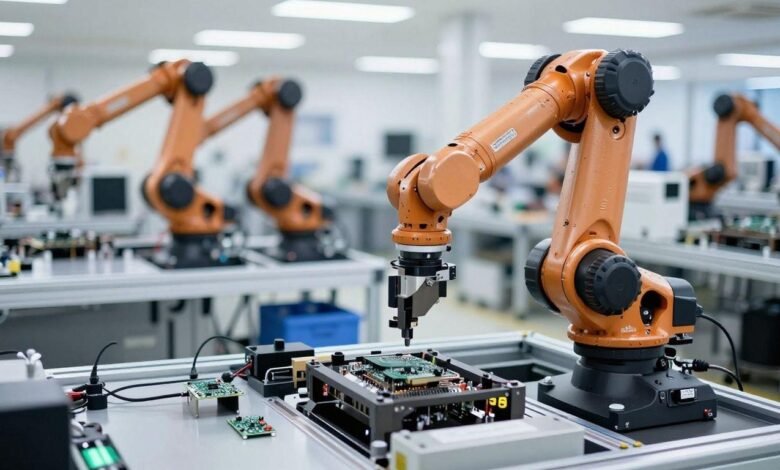
Setting up a production facility requires significant investment in surface mount technology and assembly robotics. By partnering with a firm that already operates these assets, businesses avoid the high entry costs of machine procurement and maintenance. This approach removes the need to secure funding for industrial equipment that quickly loses its value.
Minimizing labor and facility overhead costs
Maintaining a full-scale factory involves expenses that go far beyond basic assembly wages. Firms using professional electronics manufacturing services UK avoid the complexities of managing specialized production staff, utility bills, and factory insurance. This creates a predictable expense model that fluctuates based on actual output needs rather than fixed operational requirements.
Leveraging economies of scale with specialist partners
Specialized manufacturers consolidate orders from various clients, yielding significant discounts on raw materials and electronic components. These savings are passed on to the customer, making large-scale production runs much cheaper than attempting similar work internally. The following table highlights common cost-saving metrics experienced by companies transitioning to external partners.
| Efficiency Factor | In-House Management | Specialist Partner |
| Material Sourcing | High unit cost | Bulk discount pricing |
| Equipment ROI | 5-7 year horizon | Costs already covered |
| Total Floor Space | High overhead | Optimized shared facility |
By pooling purchasing power, partners deliver more value for every component used in the assembly process.
Avoiding the hidden costs of in-house rework and waste
Every error in an internal production line represents a direct loss in profit and time. When businesses utilize established manufacturers, they benefit from proven processes that catch defects before they cause costly delays. Professional teams maintain strict protocols to ensure quality, effectively shielding the business from the financial impact of scrap or rework.
Access to advanced technology and expertise
Keeping internal production lines updated with the latest technological shifts is a constant struggle for many firms. Electronics manufacturing services provide immediate entry into high-tech environments without requiring an internal team to master every new configuration. This allows businesses to focus on growth while their partners handle the technical implementation.
Utilizing cutting-edge automated assembly equipment
Modern assembly lines utilize high-speed robotic systems that place components with incredible precision. These systems often feature sophisticated optical inspection tools that aren’t feasible for most small or medium-sized businesses to maintain. Partnering with a facility that invests in this infrastructure guarantees a higher level of manufacturing precision without ongoing capital investment.
Benefiting from highly specialized engineering experience
Internal teams are usually generalists, but manufacturing requires a deep, niche knowledge of PCB design and production variables. Specialists bring decades of experience, having solved countless problems for diverse projects across various sectors. This deep expertise ensures that even the most complex products are handled with professional care.
Accessing proprietary testing and prototyping capabilities
Before a new device hits the market, it must pass rigorous functionality assessments. Leading service providers offer specialized testing environments, including thermal shock cycles and vibration checks, which verify product durability. These capabilities allow developers to iterate faster, knowing their hardware has been put through its paces.
Staying ahead of rapid global electronics trends
Technological landscapes shift in mere months, and staying updated is a major competitive advantage. Partners who work with tech giants and startups alike gain a unique view of emerging trends. This knowledge helps businesses anticipate component supply shifts and adopt new design features earlier than competitors could manage alone.
Scalability and supply chain flexibility
Market demand often comes in waves, making it difficult for an internal facility to maintain consistent capacity. Outsourcing allows companies to reach the necessary volume without needing to hire temporary help or rent extra space. This inherent flexibility acts as a safeguard during periods of unexpected growth or economic contraction.
Adapting efficiently to fluctuating production volumes
During busy quarters, the ability to rapidly increase production is vital for capturing market share. A qualified partner adjusts their line capacity to match the customer’s needs, preventing the bottlenecking that often happens when relying on an inflexible internal shop. This scaling capability ensures that customer orders are fulfilled on time even during seasonal spikes.
Streamlining component procurement and specialist sourcing
Sourcing the right resistors, capacitors, and microprocessors is a daunting task during supply shortages. Professional manufacturers maintain relationships with global distributors to secure necessary parts. To keep operations simple, they follow a standard procurement flow to ensure production keeps moving:
- Reviewing current design bills of materials for optimal part selection.
- Engaging pre-qualified global distributors for consistent stock availability.
- Monitoring international market pricing to keep costs within client estimates.
- Organizing secure warehousing for delicate electronic parts.
This structured approach removes the administrative headache of managing dozens of individual component vendors.
Reducing lead times for small-batch prototyping
Fast prototyping is critical for getting products to market ahead of others. Specialists manage the logistical flow to turn a CAD drawing into a physical prototype in record time. This speed is essential for refining designs and validating concepts before committing to mass manufacturing.
Mitigating supply chain risks through established partnerships
Global supply chains are prone to disruptions, whether due to logistics issues or raw material shortages. Working with established manufacturers means benefiting from their contingency plans and diversified vendor networks. These partners handle the heavy lifting of logistics, ensuring that production remains stable even when global conditions become turbulent.
Quality control and regulatory compliance
Meeting the high quality standards expected in today’s electronics industry is a full-time commitment. When companies outsource, they leverage the partner’s existing regulatory documentation and compliance framework. This approach ensures every device meets necessary benchmarks, reducing the risk of recalls or safety issues during product release.
Adherence to international ISO and IPC standards
Quality in electronics is measured through strict industry standards that guide every step of the assembly process. Top-tier providers maintain certifications such as ISO 9001 and IPC-A-610, which act as a seal of trust for end-users. These standards are not just paperwork; they dictate the exact procedures for assembly, cleaning, and inspection.
Implementing rigorous testing protocols for PCB assemblies
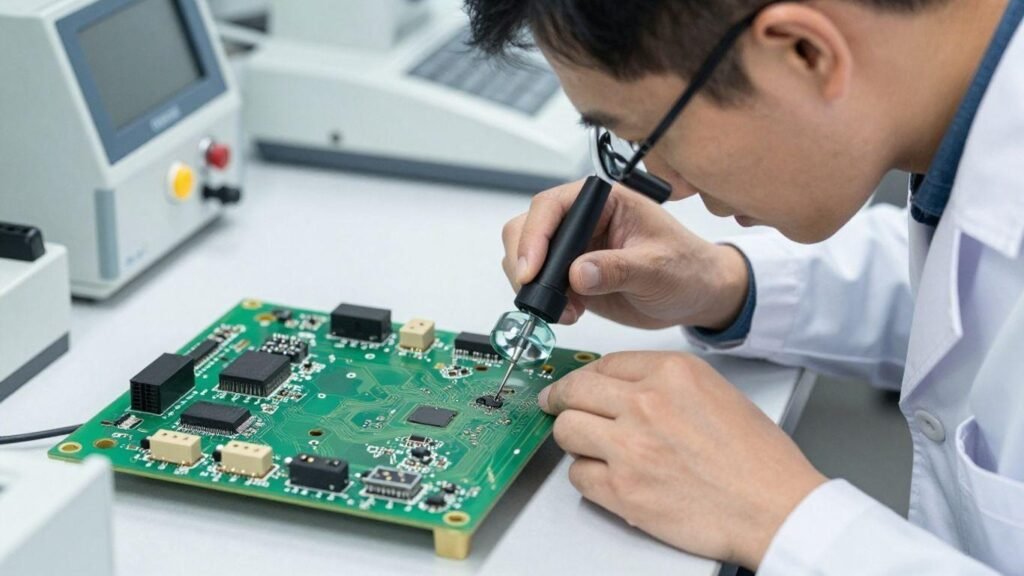
Every board requires a tailored testing suite to prove its functionality before leaving the factory. Specialists utilize automated in-circuit testing, flying probe techniques, and functional programming to ensure zero defects. By integrating these checks early in the process, the partner identifies and fixes issues before they grow into expensive failures.
Ensuring full traceability throughout the production cycle
In highly regulated sectors, knowing the origin of every component on a board is absolutely required. Professional systems track batches and serial numbers from receipt to the final packaging stage. This level of granular visibility protects brands and allows for precise monitoring of any potential issues that may arise in the field.
Navigating UK-specific environmental and safety regulations
Manufacturing in the UK carries specific requirements regarding material disposal and hazardous substances. Local experts stay current with these regulations, ensuring that all production adheres to the law without requiring the client to research every nuance. This local compliance prevents legal issues and reflects positively on the brand’s commitment to safety.
Focusing on core business competencies
When a business spends its time managing warehouse logistics or soldering joints, it isn’t focusing on the work that actually builds its brand. Outsourcing allows leadership to reallocate precious energy toward activities that drive growth. This strategic shift is often the difference between stagnant operations and successful product expansion.
Transitioning from manufacturing to design and R&D
Manufacturing is a distinct discipline that requires a unique set of skills and mindset. By handing production duties to a specialist provider, the internal team can focus on the research and development of the next product generation. This allows the best minds in the company to concentrate on innovation rather than assembly troubleshooting.
Redirecting internal talent toward product innovation
Talented engineers are far more valuable when they are brainstorming new features or improving software interfaces. When the repetitive work of assembly is offloaded, internal employees are free to focus on creative tasks that provide actual value to the customer. This fosters a better company culture where talent is directed toward solving interesting problems.
Improving time-to-market for new electronic devices
Getting a product into the hands of the end-user requires a fast, efficient manufacturing pipeline. When the production phase is managed by external experts, the entire time-to-market process is compressed. This speed helps companies secure first-mover advantages, making it easier to dominate niche markets before others can pivot.
Streamlining operational workflows for greater agility
Complex supply chains often create bloated internal workflows that slow down decision-making. By consolidating production with a manufacturing partner, firms clarify their operational structure and gain faster feedback loops. This newfound agility allows the company to pivot quickly when customer demands change or new market opportunities present themselves.
Localized advantages of using electronics manufacturing services UK
Working with manufacturing partners within the same region drastically simplifies the entire production lifecycle. Proximity encourages better coordination and allows for stronger relationships that can be built over time. This approach avoids many pitfalls associated with overseas production management.
Reducing international logistics and carbon footprints
Shipping components across continents is not only expensive but adds significant risk and carbon emissions to the process. Utilizing local services minimizes travel time for goods and reduces the fuel required to move the final product to the end-user. This is an efficient way to keep the supply chain sustainable and manageable.
Enhancing communication via common time zones and language
When challenges arise, the ability to hop on a quick call with partners who speak the same language and work in the same time zone is a massive advantage. Misunderstandings are corrected in real-time, preventing errors that often occur due to language barriers or major time differences found with overseas vendors.
Strengthening intellectual property protection within domestic borders
Intellectual property is the lifeblood of most technology companies, and outsourcing far from home can sometimes introduce risks. Keeping manufacturing within domestic borders ensures clear legal recourse and easier control over designs and proprietary methods. This sense of security promotes deeper collaboration and trusts between the firm and its manufacturing team.
Facilitating easier on-site supplier audits and integration
Occasionally, it is necessary to inspect a facility to ensure it meets specific quality or safety requirements. Traveling to a domestic location for a quick audit is simple and allows for deeper integration and partnership reviews. This hands-on oversight builds strong alliances and ensures that both parties remain aligned on quality and deadlines.
Conclusion
Outsourcing the production of PCBs and electronics provides a pathway for businesses to shed operational weight and reach new heights. By utilizing high-quality electronics manufacturing services UK in local facilities, companies gain access to superior technology, improved scalability, and deep engineering expertise. Transitioning these tasks ensures that internal focus stays on innovation, ultimately driving better outcomes and shorter paths to market for every new product launch.