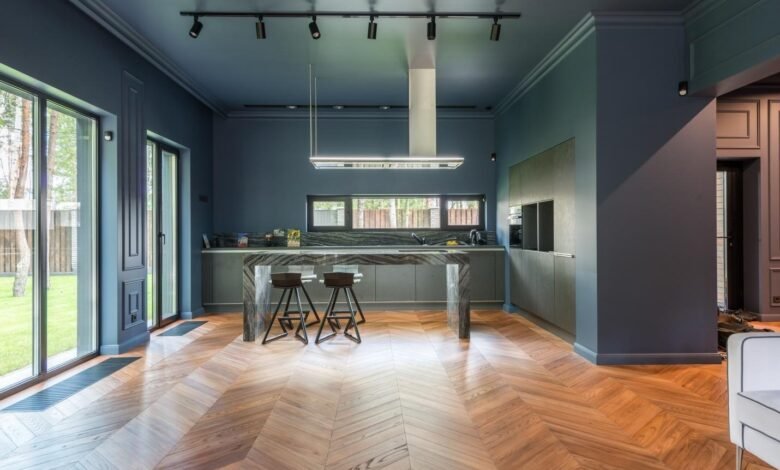
Anyone redoing an apartment floor in Dubai right now keeps running into the same three letters from flooring showrooms and contractors: LVT. It usually comes up the moment you say you want a wood look but don’t want the price or the upkeep of real timber, and in the last few years it’s gone from a niche option to one of the most fitted floors in the city’s apartments and villas. The pull is simple enough, it gives you the look people want without most of the problems that come with the materials it imitates.
What Is LVT (Luxury Vinyl Tile)?
LVT is vinyl flooring built up in several layers, with a printed photographic layer that mimics wood or stone sitting under a clear protective wear layer on top. That printed layer is detailed enough to copy the grain of oak or the veining of marble convincingly, and the wear layer above it is what takes the daily scuffing instead of the design.
The “luxury” part separates it from the old sheet vinyl that came in big rolls and announced itself as plastic the moment you looked at it. LVT comes as individual planks or tiles you lay piece by piece, with more thickness, a textured surface you can sometimes feel under bare feet, and a finish that passes for the real material at a glance.
Key Benefits
Water is where LVT pulls ahead of the wood and laminate it copies. A spill, a mopping, a leak under the sink, none of it swells or stains the floor the way it would ruin timber, so LVT goes into kitchens and bathrooms where real wood can’t.
The wear layer on top resists the scratches and surface stains that everyday life throws at a floor, so dragged chairs, dropped cutlery, and pets’ claws don’t mark it the way they would softer surfaces. That toughness has limits, which the pros and cons cover, but for normal household use it holds up well.
Underfoot it’s warmer and quieter than tile or stone, with a slight give that makes a kitchen more comfortable to stand in and softens the click of footsteps that hard floors echo around a room.
For Dubai specifically, the climate point matters more than the brochures let on. A quality LVT is built to stay dimensionally stable through the heat and the humidity swings between hard AC and switched-off months, so it doesn’t warp, lift, or fade in strong window sun the way cheaper floors can. Lower-end LVT is more prone to this, which is part of why thickness and grade are worth paying attention to later.
Pros and Cons
On the plus side, it’s durable under normal use, it asks for very little maintenance, and it costs a good deal less than the hardwood or natural stone it imitates while getting close to the look.
The honest downsides are worth knowing before you commit. It isn’t real wood, so it doesn’t carry the same resale prestige in a high-end villa, and a buyer who wants genuine timber will know the difference underfoot. It also shows whatever is underneath it, any bump, dip, or grit left on the subfloor telegraphs up through the planks over time and can even wear them unevenly, which is why the prep work matters as much as the product.
LVT Cost in Dubai
LVT in Dubai runs roughly from the budget end around AED 40 per square meter up past AED 150 for premium ranges, and where you land depends mostly on three things. Thicker planks with a heavier wear layer cost more and last longer under traffic, the better-printed and textured designs sit at the top, and the cheapest stock is thin, prints flatter, and wears through sooner. The wear layer thickness in particular is what you’re really paying for, since it decides how many years of scuffing the floor survives.
Against the alternatives, the value shows over time rather than on the invoice. You’re not refinishing it like wood or replacing grout like tile, so the low maintenance keeps the long-run cost down even when a cheaper floor looked tempting upfront.
LVT vs Other Flooring
SPC is the closest relative and the one most worth understanding, because it’s essentially a rigid version of LVT built on a stone-plastic core. That rigid core makes it harder underfoot and more dimensionally stable, so it handles big temperature swings and uneven subfloors better than flexible LVT, which is why it’s often the pick for ground floors, sun-blasted rooms, or anywhere the slab isn’t perfectly level. The trade-off is that LVT’s slight flexibility and softer feel are more comfortable to stand and walk on.
Laminate is the cheaper lookalike, with a fibreboard core under a printed surface, and its weakness is water: a spill that sits, or a damp Dubai bathroom, swells the core and the planks lift at the edges. It works in dry bedrooms and living rooms on a tight budget, but it doesn’t belong anywhere near moisture.
The short version for choosing: LVT for the balance of comfort and water resistance in most rooms, SPC where you need extra rigidity or you’re not sure the subfloor is level, and laminate only in dry rooms where saving money matters more than longevity.
Caring for LVT Flooring
A sweep or vacuum to clear grit, then a damp mop, is the whole routine, no waxes, no special vinyl chemicals, and definitely nothing abrasive that would dull the wear layer.
Scratch resistance isn’t scratch-proof, so a couple of small habits add years to the finish: felt pads under chair and table legs, a mat at the entrance to catch the sand that gets walked in, and lifting heavy furniture rather than dragging it across the planks.
Choosing & Installing LVT the Right Way
Match the wear layer to the room before anything else, a thin one is fine for a guest bedroom but will wear through in a hallway or a kitchen that takes constant traffic, so the busier the room, the thicker the layer you want. Buying on price alone is how people end up with a floor that looks tired in two years.
Installation is the other half, and it’s where the subfloor problem from earlier gets solved or baked in. A level, clean, dry base and tight, even seams are what keep the planks from lifting, gapping, or showing every flaw beneath them, and getting Lvt flooring dubai chosen and fitted properly is what decides whether it still looks right years down the line rather than months.
Conclusion
For families, pet owners, and busy apartments where a floor needs to take spills, traffic, and Dubai’s heat without constant fuss, LVT fits better than most of what it competes with. Just don’t treat it as a real-wood substitute in a home where that authenticity is the point, and put the money where it counts, into the wear layer and the install.