What Stringent Quality Control Steps Make MFG Merch Commercial Apparel Decoration Stand Out from Competitors?

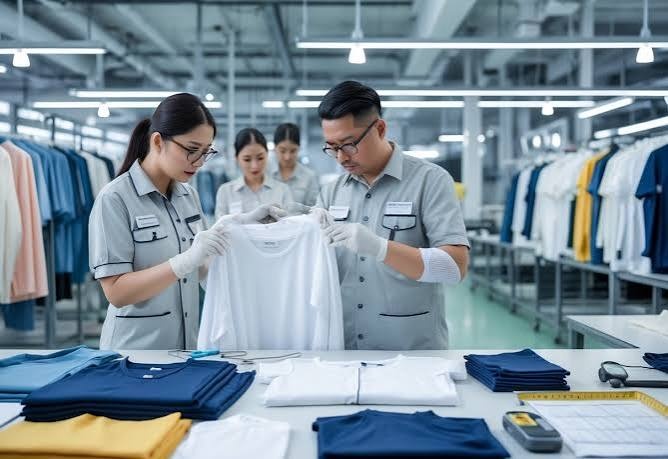
Product defects in the textile industry account for billions in annual losses, yet many brands still struggle with inconsistent quality when scaling their production. A single batch of poorly cured shirts or misaligned logos can destroy a brand’s reputation and result in massive return costs. MFG Merch commercial apparel decoration solves these systemic issues by applying rigorous, industrial-grade quality control protocols that exceed standard retail requirements. This article explains the technical frameworks and manual inspections required to maintain a zero-defect environment in high-volume manufacturing.
Main Takeaways
1. Technical precision in pre-production prevents 90% of common decoration errors.
2. Continuous monitoring during the production run ensures color consistency and registration accuracy.
3. Specialized post-decoration testing verifies the chemical and physical integrity of the print or stitch.
4. Human inspection at the final stage catches microscopic flaws that automated systems might miss.
Industrial Apparel Manufacturing Quality Standards
Industrial apparel manufacturing requires a level of consistency that small-scale shops simply cannot replicate. The difference between a hobbyist and a commercial-grade facility lies in the documentation and standardization of every movement. In high-volume environments, quality control is not a final check; it is an integrated part of the entire workflow. For private label apparel branding, the decoration is the brand. If the ink cracks or the embroidery puckers after three washes, the consumer blames the brand, not the factory. This reality necessitates a quality management system that monitors variables like ink viscosity, screen tension, and humidity levels in the production hall.
Pre-Production Accuracy and Digital Verification
Digital Proofing and Mockup Approval
Accuracy begins long before a garment touches a machine. Digital proofing involves more than just a visual representation; it requires precise mathematical placement and dimensioning. Technical designers must specify the exact distance from the collar or side seams in millimeters. This phase ensures that the high-volume custom merchandise produced remains uniform across different sizes, from XS to 3XL. Without these locked-in specifications, designs often appear disproportionately large on smaller shirts or too small on larger ones.
Pantone Matching System Precision
Color integrity is non-negotiable for commercial clients. Using the Pantone Matching System (PMS) ensures that a brand’s specific blue remains consistent regardless of the substrate. Different fabrics absorb light and ink differently; a cotton shirt will display a color differently than a polyester blend. Skilled technicians adjust ink formulas based on the garment’s base color to prevent “color shift,” which often occurs when dark garment dyes bleed into lighter ink layers.
Substrate Compatibility Audits
Every fabric requires a specific chemistry. A 100% polyester performance shirt needs low-bleed inks and lower curing temperatures to prevent dye migration. Conversely, heavy fleece requires a different ink viscosity to ensure the print doesn’t sink too deep into the fibers. Pre-production audits involve testing how the fabric reacts to heat and pressure, ensuring the selected decoration method—be it custom wholesale screen printing or heat transfer—is physically compatible with the garment’s construction.
Technical Setup and Strike-Off Inspections
Screen Tension and Calibration
In screen printing, the tension of the mesh is measured in Newtons. If the tension is too low, the image will appear blurred or ghosted. Commercial-grade production requires constant monitoring of screen tension to ensure sharp edges and fine detail. Daily calibration of automatic presses and multi-head embroidery machines is mandatory to account for mechanical wear and tear, ensuring that the tenth-thousandth unit looks identical to the first.
The Physical Strike-Off Sample
A strike-off is the first physical print or embroidery produced on the actual machine set for the production run. A lead technician must compare this physical sample against the approved digital proof. This is the final gatekeeper in the process. The technician checks for registration (how colors align), ink opacity, and stitch density. Production only commences once this physical sample is signed off and archived for future reference.
Continuous In-Line Production Surveillance
High-Speed Registration Monitoring
During a run of contract apparel printing, machines operate at high speeds. Even a slight vibration can cause a screen to shift by a fraction of a millimeter. Operators perform continuous visual checks to ensure that the “trap”—where colors overlap or meet—remains perfect. In bulk embroidery services, this stage involves checking for thread breaks or “bird-nesting” under the garment, which can weaken the structural integrity of the design.
Temperature Tracking and Ink Curing
The most common cause of print failure is improper curing. If the ink does not reach its specific fusion temperature—usually around 320 degrees Fahrenheit for plastisol—it will wash off. Production teams use infrared thermometers and thermal tape to track the temperature inside the conveyor dryers. This ensures the ink is cured all the way through without scorching the fabric, a delicate balance that requires constant environmental adjustment.
Performance and Durability Evaluations
The Stretch and Adhesion Test
Once a garment leaves the dryer, it undergoes a stretch test. This involves pulling the fabric to its limit to see if the ink cracks or peels. For promotional garment decoration that involves vinyl or heat transfers, adhesion audits are performed to ensure the glue has fully bonded with the textile fibers. This step simulates the stress the garment will face during daily wear and athletic activity.
Wash-Fastness and Abrasion Testing
For large industrial runs, random samples are subjected to accelerated wash tests. This confirms that the curing process was successful and that the colors will not bleed or fade prematurely. This level of scrutiny is what separates professional manufacturers from discount shops that skip these time-consuming but essential steps to save on costs.
Fabric Comparisons: Screen Printing vs. Embroidery
Choosing between screen printing and embroidery involves more than just aesthetic preference; it requires an understanding of how each method interacts with the fabric. Screen printing is generally preferred for large, flat designs on lighter fabrics, while embroidery offers a premium, tactile feel suitable for heavier outerwear and headwear. Each has unique quality control challenges. For instance, embroidery requires careful monitoring of stitch count to prevent the fabric from becoming too stiff, whereas screen printing focuses on ink thickness and layering.
Quick Comparison Table
Use this table as a quick reference when deciding between materials and decoration methods based on long-term performance and brand requirements.
| Attribute | Screen Printing | Embroidery | Heat Transfer | Sublimation |
| Durability | Excellent; lasts 50+ washes | Highest; lasts life of garment | Moderate; can peel over time | Permanent; ink is in fibers |
| Detail Level | High for vector art | Moderate; limited by thread | Highest for photography | High for complex patterns |
| Feel/Texture | Flat or slightly raised | Textured and premium | Thin film feel | No feel (soft) |
| Cost Impact | Low on high volumes | Higher due to stitch count | Moderate for small runs | High for full coverage |
| Ideal Use | Bulk events, retail tees | Corporate wear, outerwear | Personalized jerseys | Performance activewear |
Expert Advice on Order Scalability
When scaling from a small batch to a run of 50,000 units, the primary risk is “quality drift.” This occurs when the human eye becomes accustomed to small errors over hours of production. To combat this, we implement a rotation system for inspectors and use high-output light tables that reveal pinholes or ink splashes invisible under standard warehouse lighting. For brands looking to scale, always ask your manufacturer about their AQL (Acceptable Quality Level) standards. A professional facility will have a specific percentage of allowable minor defects and a zero-tolerance policy for major functional defects.
Final Finishing and The Human Touch
The final stage is where every individual piece is manually handled. Inspectors look for loose threads, known as “wild threads,” and trim them. They also check for “hoop marks” in embroidery, which are temporary indentations left by the machine. Finally, the garments are folded, tagged, and bagged according to retail-ready standards. This ensures that when the client opens the box, the product is ready for immediate sale without any further processing required on their end.
Recap
Quality control in commercial apparel is a multi-layered discipline. It requires digital precision during the design phase, mechanical calibration during production, and human intuition during the final inspection. By focusing on variables like ink curing temperatures, screen tension, and fabric compatibility, a manufacturer can guarantee a product that maintains its integrity through years of use. These steps protect the brand’s bottom line by reducing returns and building long-term consumer trust.
FAQs About MFG Merch commercial apparel decoration
How does MFG Merch ensure my logo colors are exact?
The facility utilizes a computerized ink-mixing system based on the Pantone Matching System. This allows for the creation of exact ink formulas that account for the substrate’s color and material composition, ensuring consistent branding across all products.
What happens if a defect is found during the final inspection?
Any garment that fails the final inspection is pulled from the production line. If the defect is minor and fixable, it is corrected; if not, the piece is discarded, and a replacement is produced to ensure the client receives the full quantity of high-quality goods ordered.
Can MFG Merch help me select the right fabric for my brand?
Yes, the production team provides expert guidance on substrate selection based on the intended use of the garment. They evaluate factors like GSM, fiber content, and decoration compatibility to ensure the final product meets both aesthetic and durability requirements.
Why is screen tension so important for quality?
Proper screen tension ensures that the mesh snaps back quickly after the squeegee passes, which results in a sharp, crisp print. Low tension leads to blurry edges and inconsistent ink deposits, which are unacceptable in commercial-grade apparel production.